


For the Exchange, sustainability isn’t just for Earth Day: It’s an everyday part of the mission to serve those who serve.
“Sustainability today helps ensure healthy military families tomorrow,” said Air Force Chief Master Sgt. Kevin Osby, the Exchange’s senior enlisted advisor. “By conserving energy and water as well as reducing waste, the Exchange is helping to make military communities worldwide better places to live, work and play.”
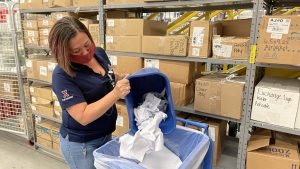
The Exchange’s ongoing sustainability initiatives include:
- Investing in LED lighting fixtures, timers and controls at BXs, PXs, Expresses, gas stations and distribution centers, realizing energy cost savings of 5.6% over five years.
- Recycling more than 7,000 tons of plastic, aluminum and cardboard annually.
- Designing and building new stores to globally recognized Leadership in Energy and Environmental Design certification standards developed by the U.S. Green Building Council, including the new, 210,000-square-foot shopping center at Joint Base San Antonio-Fort Sam Houston.
- Installing more water-efficient food court equipment during renovations and construction, realizing 30% in water savings every year.
- Encouraging the use of reusable shopping bags, each of which can replace up to 250 single-use plastic bags throughout its lifespan.
- Expanding sustainable apparel offerings from brands such as Levi’s, O’Neill and Quicksilver. The Exchange now offers Levi’s men’s and ladies’ sustainable denim and plans to introduce boys’ Eco Performance denim, featuring REPREVE® recycled performance fiber, this summer.
- Offering eco-friendly, cruelty-free cosmetics and skincare products (including vegan options) from brands such as Bravo Sierra, EcoTools, bareMinerals and Aveda.
- Increasing its selection of high-efficiency Energy Star products to 49% of all major appliances, 100% of televisions and 93% of computers.
- Intensifying the marketing of LED lamps, bulbs and lighting.
- Developing a comprehensive refrigerant management plan to manage the phaseout of refrigerants that generate harmful greenhouse gases.
The Exchange’s global logistics operation, which encompasses 11 distribution centers worldwide and the 11th-largest private retail fleet in the U.S., is also fully committed to reducing its environmental impact by:
- Recycling about 285 tons of cardboard, 600 tons of metal, 16,000 tons of pallets and 61 tons of lead acid forklift batteries in 2020.
- Recycling approximately 280 gallons of oil, 1,100 tires and 300 batteries from its fleet annually.
- Reducing greenhouse gas emissions by using self-inflating tire systems to increase miles per gallon; installing trailer skirts and aluminum wheels to improve aerodynamics and reduce weight; and replacing aging trucks with new units fitted with fuel-saving features such as automatic transmissions, adaptive cruise control and optimized idle.
Besides reducing the Exchange’s carbon footprint, conservation efforts save on energy, water and waste disposal costs, increasing earnings that can be contributed to critical Quality-of-Life programs that promote military readiness and resiliency. In the past 10 years, the Exchange distributed more than $2.2 billion to such programs, including Child, Youth and School Services, Armed Forces Recreation Centers and more.

Leave a Reply