


This week’s #FlashbackFriday happens to fall on National Pizza Day, which inspires these snapshots of Exchange pizza history.
It’s a little hard to believe, especially with pizza’s prominent position in today’s restaurant scene, that the word pizza doesn’t appear in the Exchange Post until January 1958, 2½ years after the Exchange Post launched. And it’s in a story about the Fort Leonard Wood PX Steak House, itself unusual because it offered sit-down, candlelit dining, featuring not just steak but other dishes, including “pizza pie.”
The photo at the top of this story, of Airmen at Shaw Air Force Base chowing down on pizza, accompanied pizza’s big debut in the Exchange Post, a June 1958 article headlined. “Pizza Pushing Hot Dog in Popularity Battle; Sudden Rise Due to Serviceman Acceptance. At the time, the dish was still enough of a novelty that the article explained that pizza “pronounced peetzuh.”
“Not more than five years ago, [pizza] was relatively unheard of on a national scale,” the story says, “with the exception of areas with a high concentration of population of Italian origin.”
The article credited pizza’s popularity in the Armed Forces to the Marine Corps and the Navy (“Is there anything inherent in pizza that makes it particularly a sea-going delicacy?”). But the Army and the Air Force, through their exchanges, were “rapidly climbing aboard the pizza wagon.” Shaw Airmen had a choice of plain cheese or pepperoni, “which loosely translated means mouth-watering Italian sausage.”
A few more slices of pizza history in pictures:
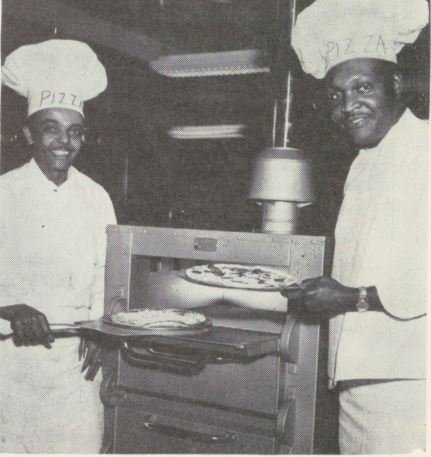 “Pizza Professionals are what these two gentlemen are dubbed by patrons of a Fort Devens regimental Exchange which specializes in appetizing and attractive pizza pies,” reads the caption on this photo from the January 1959 Exchange Post.

From the May 1961 Exchange Post: One of five vehicles used in Fort Campbell’s then-new phone-a-pizza program. Customers ordered delivery from the PX pizza concession, and pizzas were baked to order en route to the delivery.
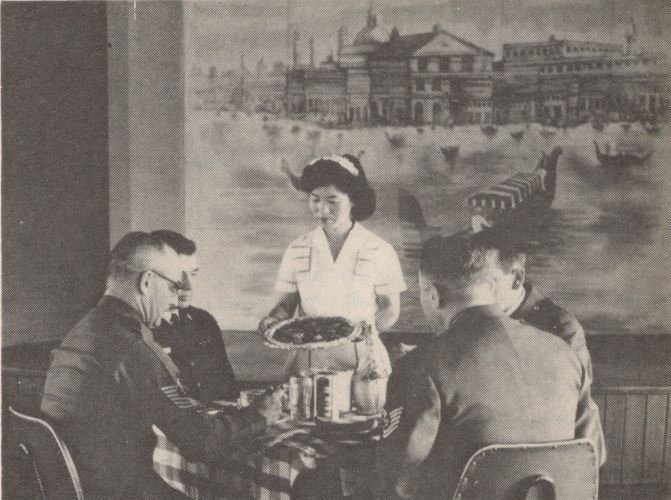
From April 1964: Restaurant Yamato, an Exchange-run establishment inside a former Officers Club at Yamato Air Station, was a trattoria that offered four varieties of pizza. When a relocation of personnel in 1963 reduced the number of tenants on the base, the Officers’ Club was turned over to the Exchange for use as a cafeteria. But John Castella, an Exchange food supervisor whose father ran an Italian restaurant in Philadelphia, came up with the idea of turning the space into a café featuring Italian specialties and table service.
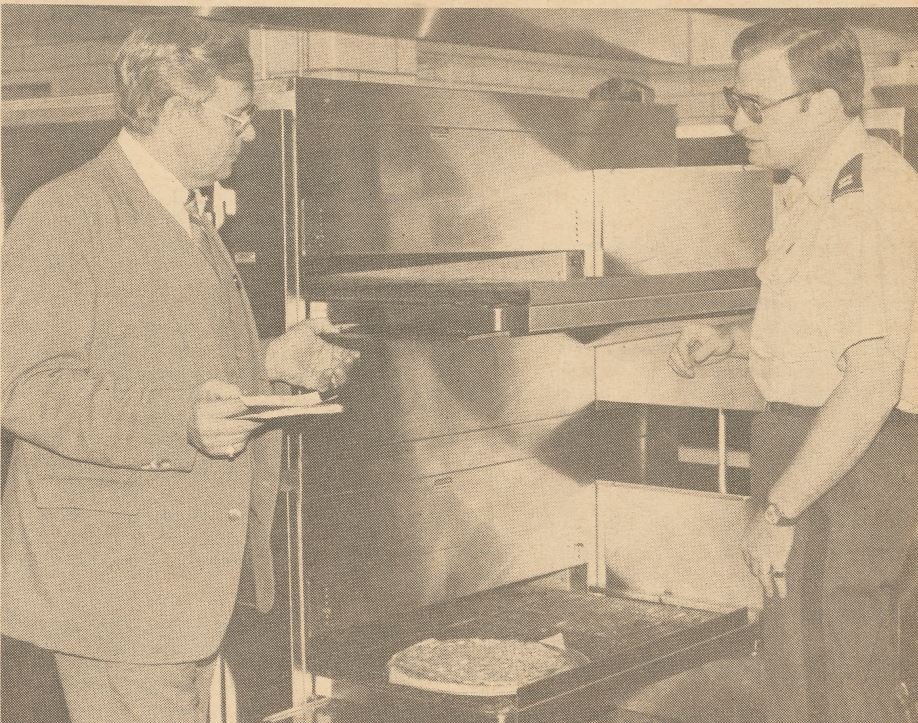
In the spring of 1986, Pizza Inn became the first brand-name pizza restaurant in the Exchange system when it opened a location in Fort Carson, Colo. Pictured are Pizza Inn manager Fred Webb, left, and Chaplain Capt. Martin Applebaum. At Applebaum’s request, the Pizza Inn developed a kosher pizza, using preparation and baking techniques separate from the establishment’s other pizzas.
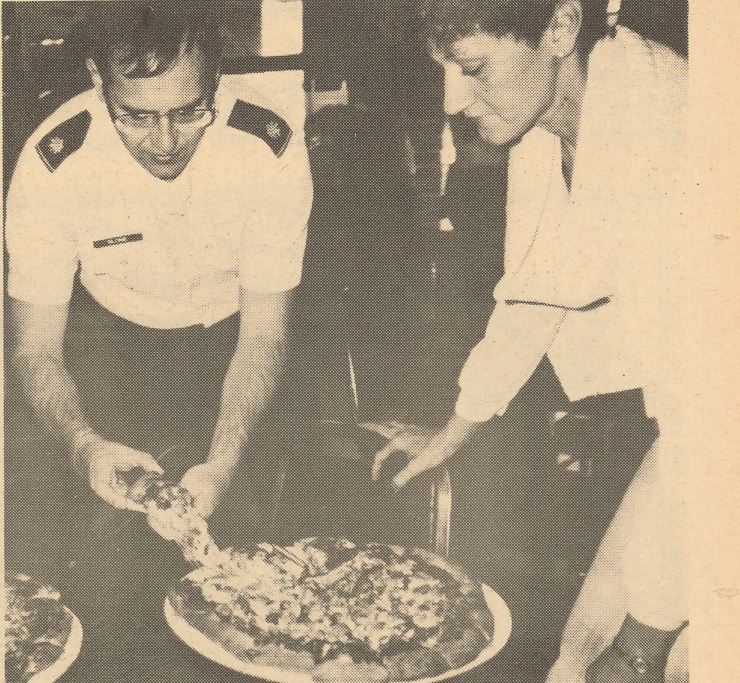
The opening of an Anthony’s Pizza at Dyess Air Force Base in 1987. Officially named Anthony’s Pizza—the World’s Greatest Pizza, the Exchange’s own pizzeria concept debuted that year at Fort Bliss. At its peak, Anthony’s had nearly 300 locations worldwide. As demand for name-brand restaurants grew, the demand for Exchange-exclusive brands declined. There are a handful of Anthony’s locations left—all in Pacific Region.

From 2020: the Pulaski Express at Kaiserlautern Military Community helps the Kaiserlautern USO host a pizza party. Hunt Brothers Pizza prepared 76 pies for the party. Hunt Brothers, which opened its first Exchange location in 2013, recently opened its 100th Exchange location at Tyndall AFB. A celebration of that landmark is schedule for March.
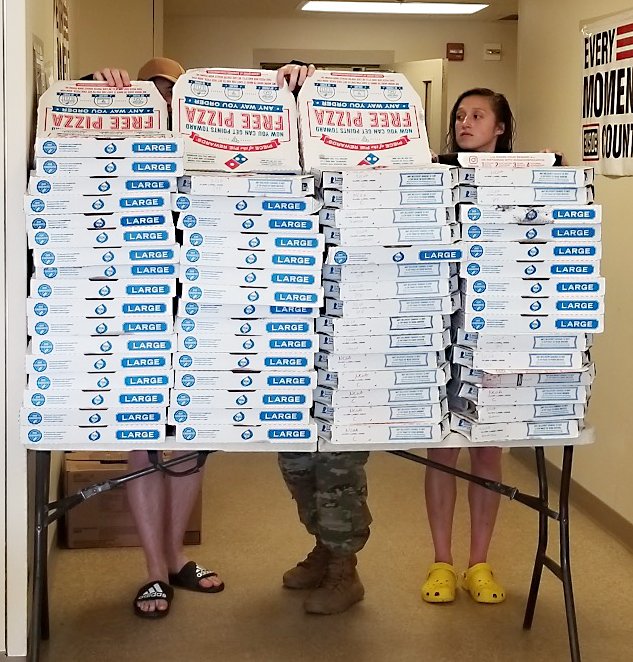
Also from 2020: The Exchange Domino’s Pizza at Fort Bragg (now Fort Liberty) delivered more than 300 pizzas to Soldiers who were quarantined on the installation after returning from the Middle East. During the peak of the COVID-19 pandemic, the Department of Defense was routinely quarantining for 14 days troops who were arriving back in the United States to ensure they didn’t have the COVID-19 virus.
Sources: Exchange Post archives, Exchange History on Flickr.



Share your thoughts!