


Twenty years ago today, on Aug. 29, 2005, Hurricane Katrina made landfall on the Louisiana/Mississippi Gulf Coast. The storm’s impact on New Orleans is well-known, but it also had a big effect on the Exchange.
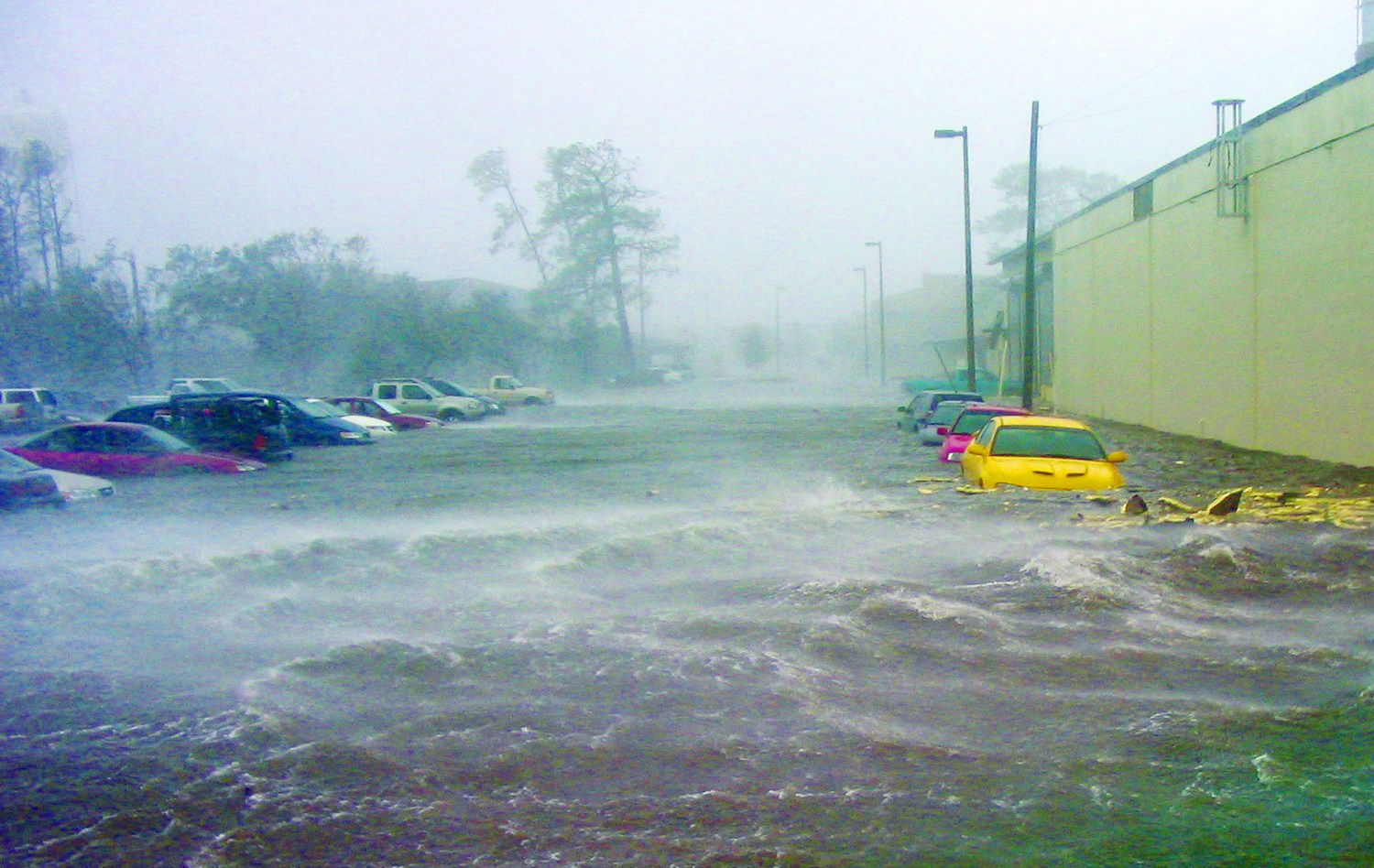
The Keesler AFB Exchange, on the Mississippi Gulf Coast, took the biggest hit, with the storm bringing damaging winds and more than 9 feet of water to the base, where more than 300 associates were employed.
Area Manager Steve Mitchell, who had been watching Katrina coverage in Pensacola, Florida, acted quickly. He packed for a day trip, putting 7 gallons of water in his vehicle. At 4:30 a.m., he started driving to the Keesler BX. He passed snapped-off billboards, empty lots where houses once stood and debris everywhere.
Everything appeared eerily serene because there was no traffic. When he crossed the drawbridge to get the Keesler exit, he encountered 1½ feet of water. Feeling secure in his four-wheel vehicle, he slowly maneuvered through the water, dodging downed power lines, pine trees and floating clothing, refrigerators and household furniture. As he approached the BX, he saw boxes of diapers, shaving cream, CDs and more merchandise in the parking lot, where it had floated away from the store.
Within 24 hours of Katrina striking, the Atlanta Distribution Center delivered ice and water to Keesler. Volunteers arrived from Exchanges at Forts Campbell and Rucker and at Eglin, Hurlburt, Maxwell and Tyndall Air Force Bases. Keesler also received help from the Waco DC, Dallas headquarters and the Little Rock AFB Exchange, which sent care packages of snack and food items.
By Sept. 1, associates from Keesler and surrounding installations reopened the Keesler mini-mall retail complex under generator power, with military family members helping stock and price merchandise.
Because there was no way to contact missing associates, the Exchange issued a public service announcement with a 1-800 number on 21 radio stations in Mississippi and Louisiana, asking associates to call in and let the Exchange know they were safe. The strategy worked well, but many of those who were safe had lost their homes or suffered major damage in the storm. AAFES Retired Employees Associates (AREA) set up a relief fund to help associates affected by the storm.
Exchange operations at Camp Shelby, Mississippi, 70 miles north of Keesler, suffered minor damage. But operations resumed quickly to support military assigned to Joint Task Force-Katrina, which coordinated overall Department of Defense relief efforts in affected areas.
More than 50 Exchange volunteers supported the troops during rescue and recovery. A tactical field Exchange (TFE) in Gulfport, Mississippi, was staffed and operational by Sept. 2. By the end of September, four additional TFEs, each staffed with five volunteers, had opened throughout New Orleans and the surrounding area.
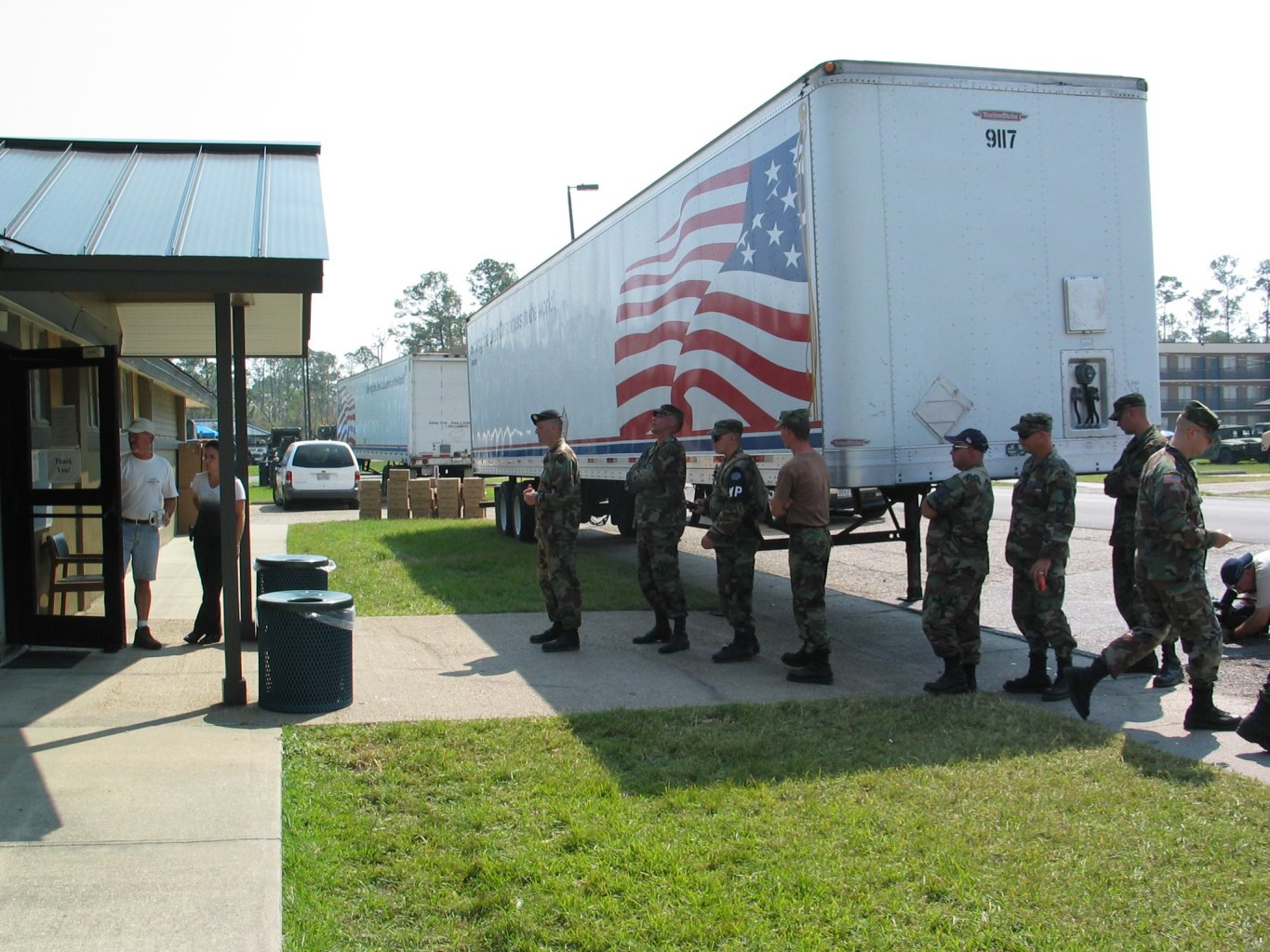
After the Armed Forces Retirement Home (AFRH) in Gulfport was damaged by the storm—10 feet of water came in, and electricity and drinking water were knocked out—the 416 retirees were moved to the AFRH in Washington, D.C. Exchange associates from Forts Belvoir and Myer, Bolling and Dover AFBs and Aberdeen Proving Ground, joined other volunteers coming to the D.C. facility. The associates not only brought supplies and gift bags full of toiletries, but also set up the rooms, scrubbing toilets and making beds.
Among the volunteers were Marla Randolph, now Exchange Chief Operating Officer/EVP, and Thea Sarver, now general manager of the MacDill AFB and Patrick SFB Exchanges in Florida.
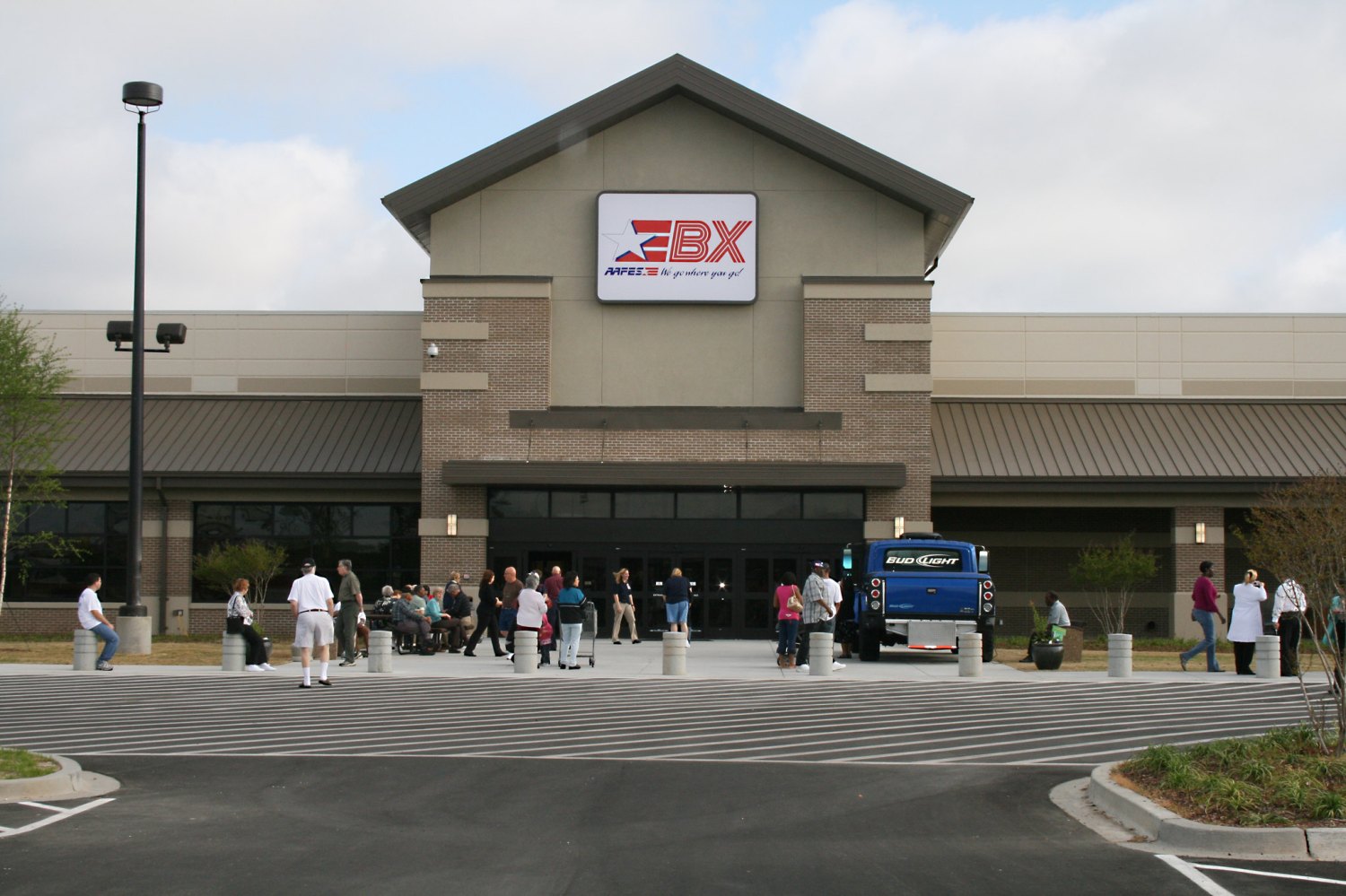
Damage to the Kessler Exchange was assessed at $4 million, and a new store had to be built. The $40 million, 171,000-square-foot store opened in 2010. Shoppers who spent the previous five years going to a 31,500-square-foot temporary facility said the new store was a welcome sight.
Another associate affected by Katrina was Jeovany Garza, current manager of the Waco Distribution Center. Garza is also a member of the Texas National Guard, which deployed during Katrina.
“When we went to offer support, the Exchange was there,” he told the Exchange Post in 2024. “We got there and within a day or two, the Waco DC sent an MFE there. Within a couple of days, we were able to go to the Exchange and buy what we needed, whether it was laundry detergent or shampoo or something else we may have forgotten. There was nothing else open in the middle of Katrina.”
Source: Exchange Post archives



Leave a Reply to Laura Duran Cancel reply