
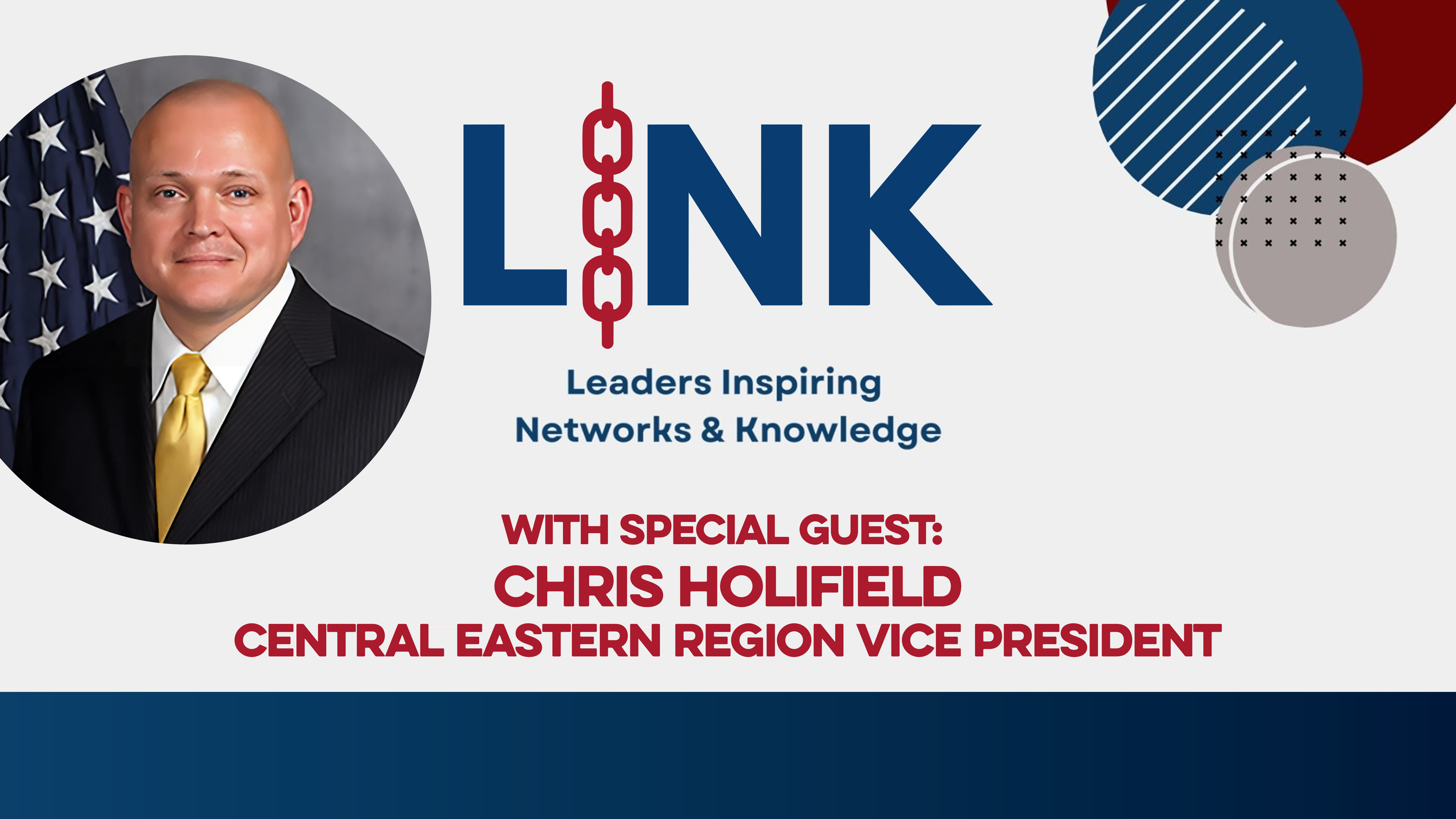

When Chris Holifield was general manager of the Joint Base Andrews Exchange, he was undergoing stress—not just from running a high-profile Exchange in the Washington, D.C. area, but from difficulties at home as well.
“It seemed every day there was an argument about something with my daughter,” Holifield, now Central Eastern Region vice president, told an audience of more than 200 Monday during June’s LINK presentation. “The drive home from work was quite lengthy, and during that drive, I would be thinking, ‘What is the argument going to be about today?’”
Holifield, who had been reading the Arbinger Institute’s book “Leadership and Self-Deception: Getting Out of the Box”—a focus of the LINK presentation—realized that he could apply the book’s lessons to both home and work. He became aware that, with his daughter, he was in a box.
“I was in the box because every day, I was preparing myself for the same thing, an argument,” he said. “I did not have any self-awareness at the time. This thought process had me entering the house already setting the stage for an argument. My body language, my tone, invited my daughter into an argument without me even realizing it.
“Reading the book made me realize that I was more of a problem than my daughter and that I was absolutely stuck in the box.”
Holifield consciously changed his approach. “I put a smile on my face,” he said. “And the first day I asked her how her day was, I think she was shocked. From that point forward, everything started to get better.”
Holifield used this personal story to illustrate what he learned from the book and how it can be applied at work and at home. Some key lessons:
Focus on listening instead of correcting: “I really tried to focus on listening, rather than correcting or even talking,” Holifield said.
Try to understand others’ needs and perspectives: “I tried to understand that being a teenager in today’s world can absolutely be stressful,” he said.
Show patience and empathy in difficult moments: “I really had to work hard on my patience and empathy, and as a result, I was able to build trust with her,” Holifield said. “Now I’m happy to say that my daughter and I are very close, and she can come to me for absolutely anything.”
Build trust by treating others as people, not as obstacles: “Leaders can begin by regularly asking self-reflective questions, such as, ‘How might I be contributing to the problem?’ or ‘Am I seeing this person as an object or as a person?’ These questions help interrupt self-deception before it becomes entrenched.”
Holifield said the book also encourages leaders to practice empathy, align their actions with their values and foster a people-centered culture—all of which is part of the same cycle.
“Acting on what we know we should do helps prevent self-betrayal and keeps leaders ‘out of the box’,” Holifield said. “When leaders consistently operate ‘outside the box,’ they foster stronger relationships, clearer communication and higher levels of engagement.
“Ultimately, the book challenges leaders to recognize that the most powerful lever for change is not authority, technique or policy, but the way they choose to see and treat other people every day.”
LINK (Leaders Inspiring Networks & Knowledge) aims to strengthen workplace culture, boost morale and reinforce the value of connection. Each month, a senior leader hosts a session via Teams aligned to key business priorities.
Associates who missed Holifield’s presentation, or want to view it again, can watch it here.


Share your thoughts!