
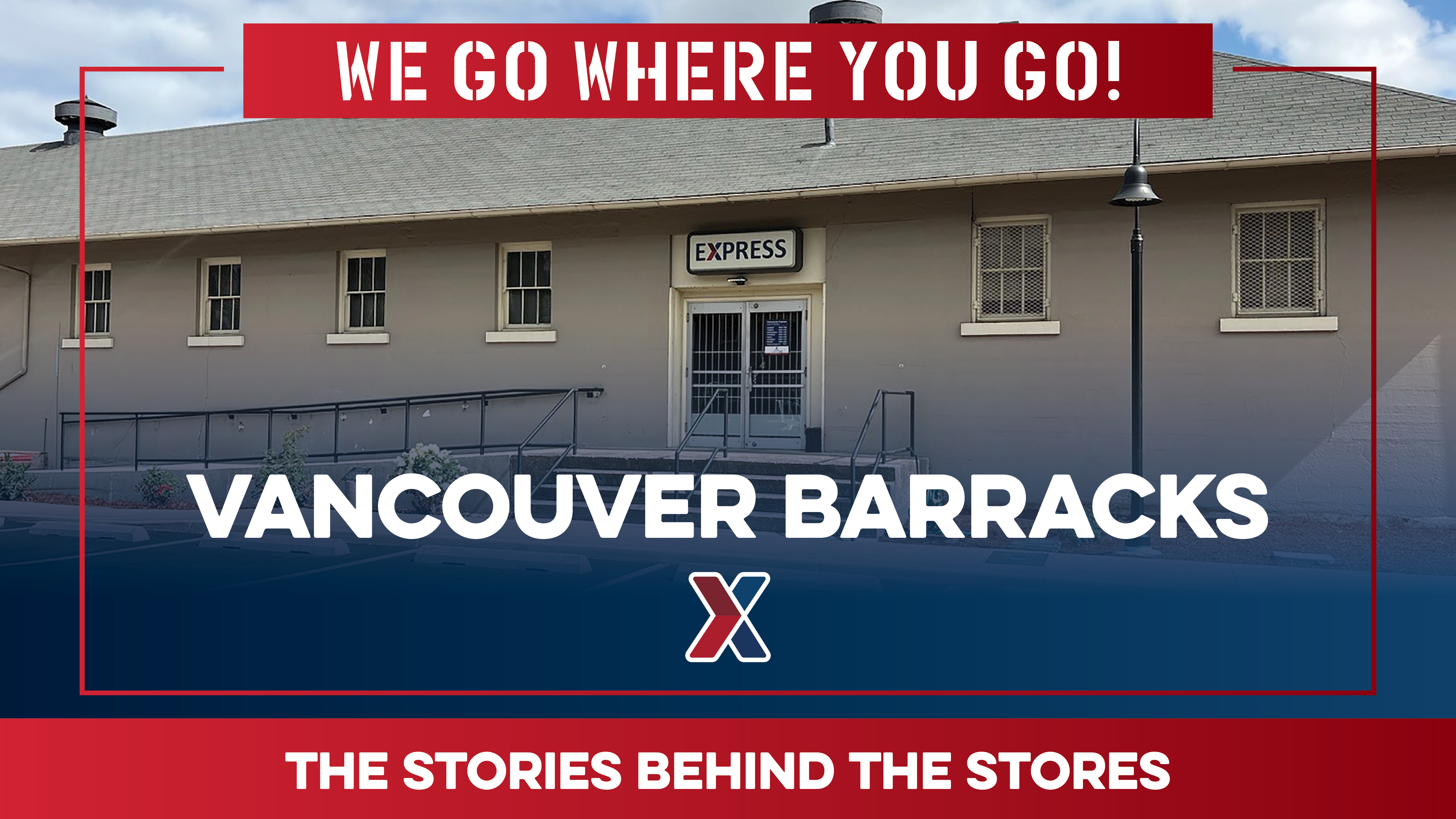

The Exchange lives up to its We Go Where You Go promise with stores serving locations all over the world, from the South Pacific to the North Atlantic, from Kuwait to Korea and more.
Many of these locations are remote and unusual, even in CONUS, where branch stores serve smaller military communities. In this Exchange Post series, we look at the stories behind these stores. This edition is about one of the Exchange’s most historic locations, Vancouver Barracks in southern Washington state
What makes it unique: Vancouver Barracks is the birthplace of the Exchange.
On Nov. 29, 1880, Col. Henry Morrow opened the first Army canteen at Vancouver Barracks to keep his troops from going into town for personal necessities but winding up in unsavory places. The one-room canteen provided newspapers, magazines, paper, pens, billiards, games, food and drinks.
After canteens grew in popularity on posts throughout the West, the War Department on July 25, 1895, issued General Orders No. 46, directing all Army commanders to establish “post exchanges”—the new name for canteens—on their installations.
Those rudimentary post exchanges evolved into today’s Army & Air Force Exchange Service, the Department of War’s largest retailer.
Nearly 150 years after Morrow introduced his canteen concept, Vancouver Barracks, now maintained by the Joint Base Lewis-McChord Exchange (about 120 miles to the north), continues to serve those who serve. The store has seen changes, but the Exchange has continuously been there from the beginning.
Number of facilities: One Express
Size of the team: Five
Who it serves: In 2011, Fort Vancouver was turned over to the National Park Service, and Vancouver Barracks is now part of the Fort Vancouver National Historic Site. Although National Guard and Reserve units moved to new facilities, the Express stayed open, serving mostly retirees.
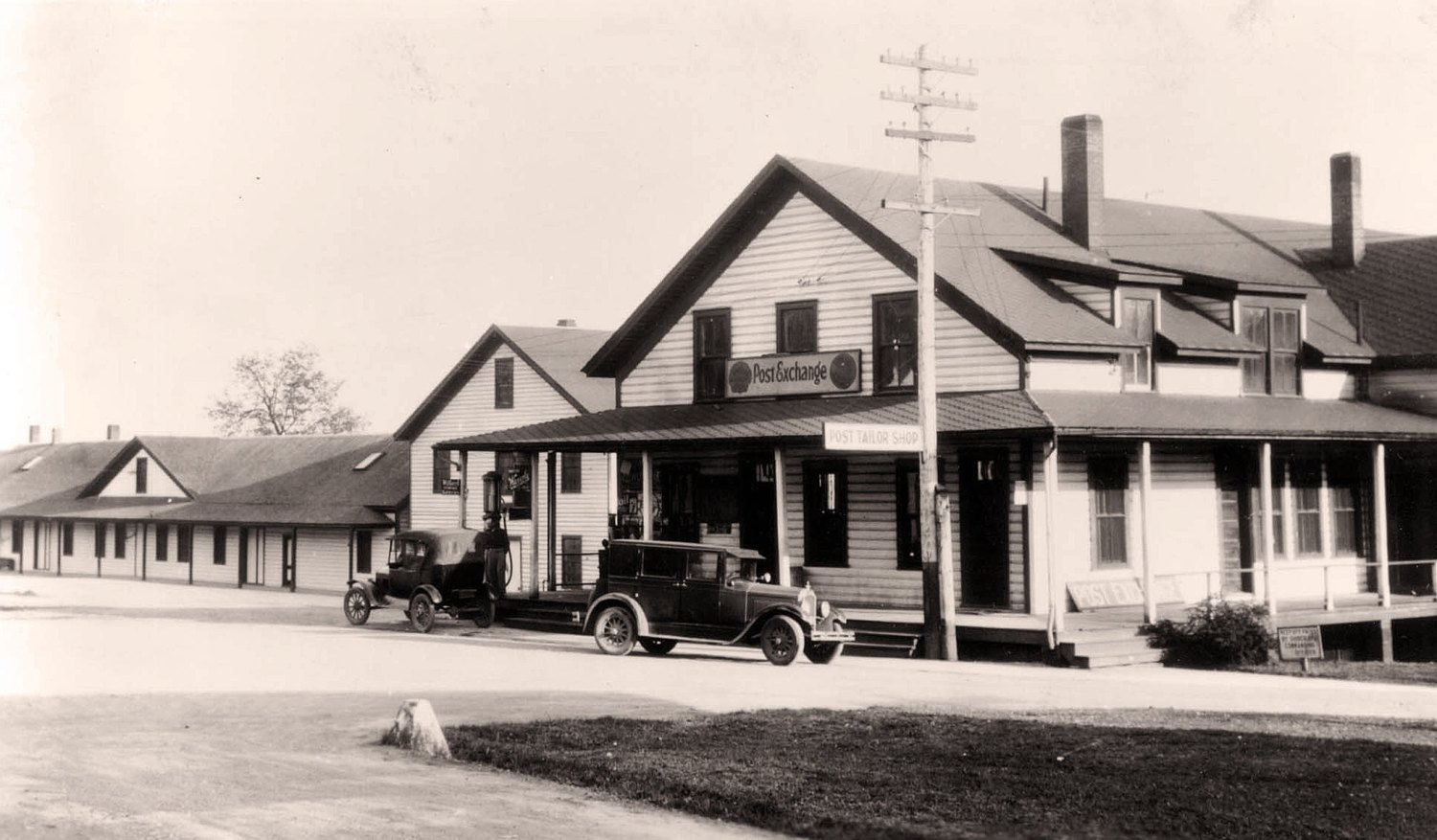
Installation history: According to the National Park Service, Vancouver Barracks was founded in 1849 as Camp Vancouver. The installation, the first Army outpost in the Pacific Northwest, went through a few name changes before taking on its current name in 1879.
During the Civil War and beyond, the post served as a major headquarters and supply depot. Historic Soldiers—Ulysses S. Grant, Philip Sheridan, George B. McClellan and others—served at the installation. Later, it supported troops during the Spanish-American War and other foreign engagements.
During World War I, the post was the principal district for the U.S. Army Signal Corps’ Spruce Production Division and the site of the world’s largest lumber mill. In 1925, the Army established Pearson Field at the post. In the 1930s, the post became the district headquarters for the Ninth Corps of the Civilian Conservation Corps (CCC) and, under the command of General George C. Marshall, provided vital support to the Pacific Northwest’s network of CCC camps. During World War II, Vancouver Barracks served as a training center and staging area for the Portland Subport of Embarkation.
After World War II, portions of the installation transferred to the National Park Service for the creation of Fort Vancouver National Historic Site. By 1949, the post included the headquarters of the Sixth Army’s Northern Military District and served as home of the 104th Division (Reserves).
For more about the installation’s deep and varied history, click here.
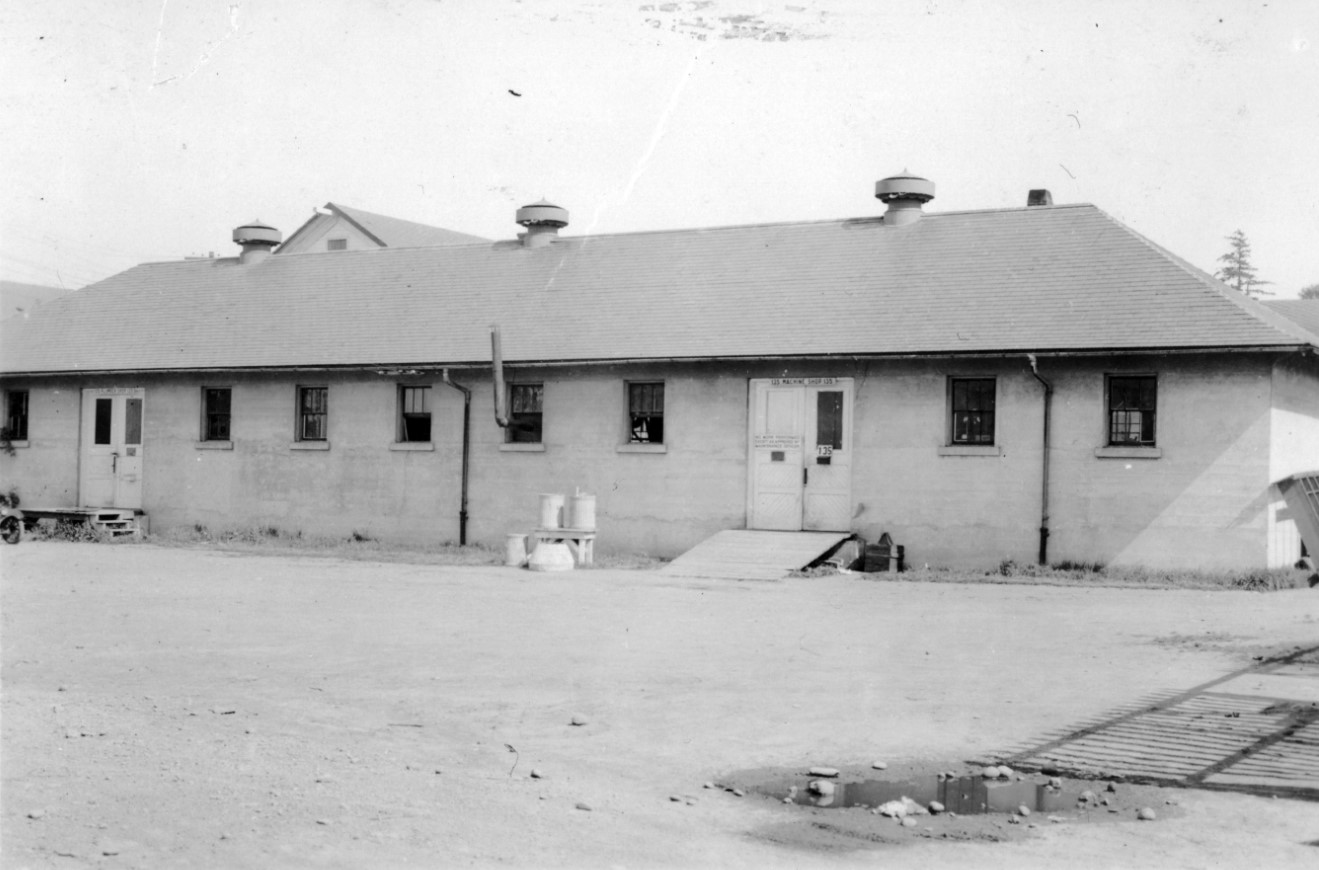
Store history: The Exchange has continuously supported Vancouver Barracks from the beginning, undergoing occasional relocations and renovations. The current building (shown at the the top of the story) originated as the Quartermaster Storehouse, which was built in 1909. The PX gained 1,000 square feet of selling space in a May 1971 upgrade and underwent another renovation in early 1984.
One of the PX’s most unusual stories of support happened in March 1972, when 200 Soldiers from Fort Lewis searched the woods near Vancouver for “D.B. Cooper,” an unidentified man who hijacked a Boeing 727 aircraft between Portland and Seattle in November 1971. He extorted a $200,000 ransom (or $1.6 million in today’s dollars)—and then parachuted from the plane.
Suddenly, the small PX had 200 additional, if temporary, customers. Fort Lewis drove a mobile field Exchange to Vancouver to support the troops. When the mobile unit arrived, the Vancouver Barracks team began assembling a stock assortment. The store usually stocked 15 packages of cupcakes; the team loaded the van with 300 packages—just one example of the expanded inventory of snacks and drinks loaded to support the troops searching for Cooper, who was never found.
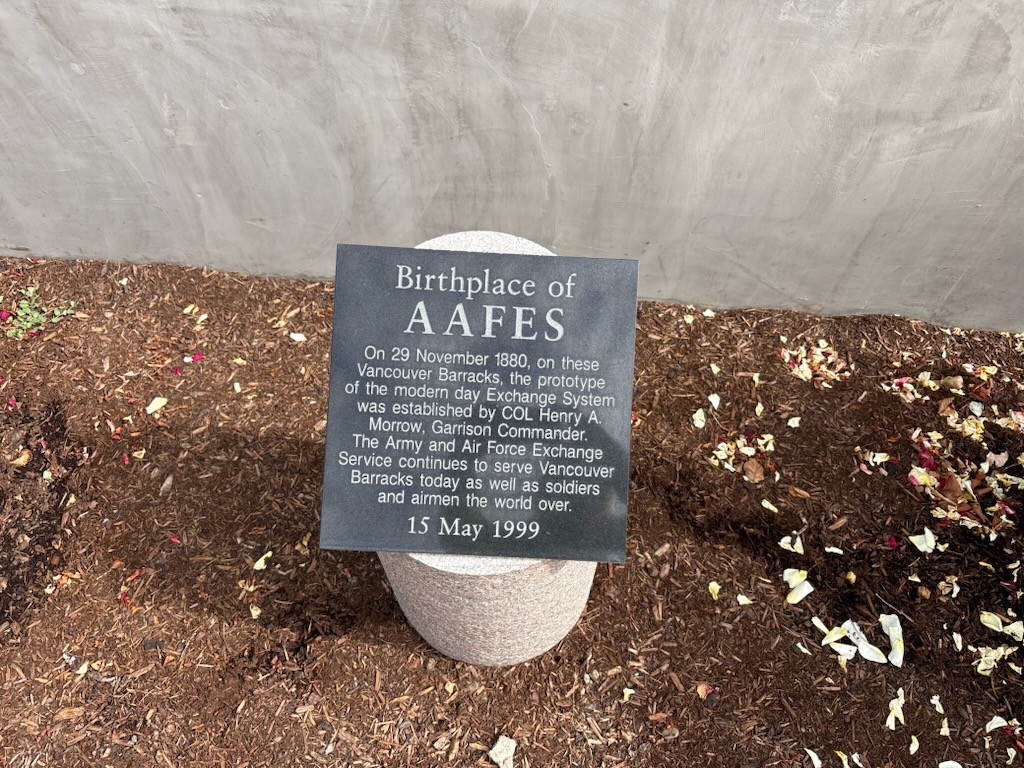
In November 2005, the 104th Division (Institution Training), commanded by Maj. Gen. T.K. Moffett, hosted a dedication ceremony for a memorial honoring Vancouver Barracks as the birthplace of the Exchange system. The memorial, provided by the National Park Service and the city of Vancouver, stands outside Building 725 on the Vancouver Barracks grounds.
What it’s like to live there: Vancouver is on Washington’s border with Oregon; the Columbia River, which separates the two states, is nearby and Portland is five minutes away. It’s a great location for fishing, hiking, biking, skiing and other outdoor activities. Mount St. Helens in Washington, Mount Hood in Oregon and the Pacific Ocean are all within a 90-minute drive from the store.
Across the street from the store is the old historic fort that started as a fur trading post and then became a military installation.
(Sources: Exchange Post archives, National Park Service/Fort Vancouver National Historic Site, Vancouver Columbian newspaper)

Share your thoughts!