
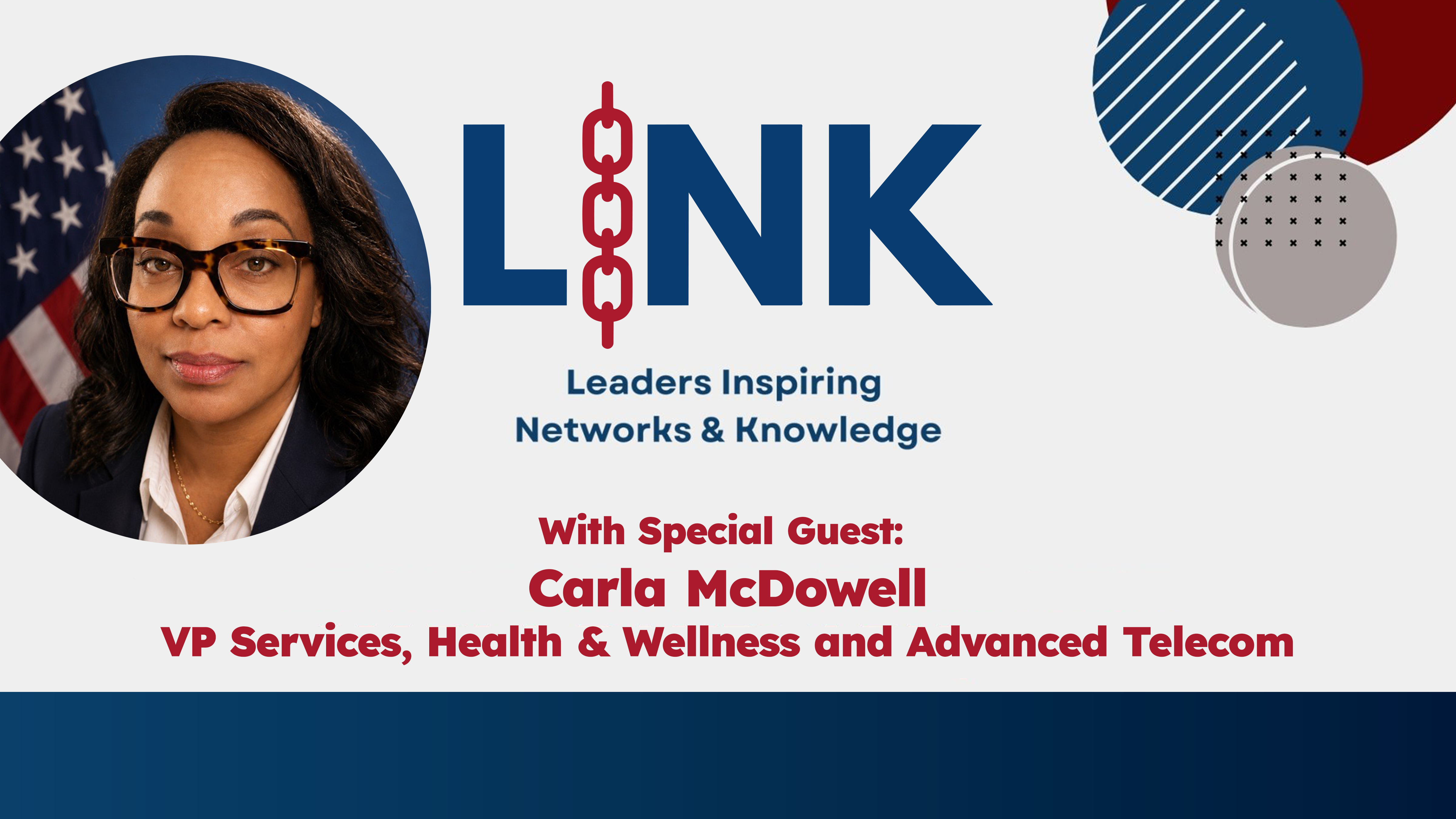

During an Exchange career that has included working as operations manager, main store manager and general manager for several Exchanges, including the world’s largest, Carla McDowell has frequently had to adapt to change and pivot quickly.
“In business or life, change requires people to let go of something that’s familiar,” McDowell, who was named Vice President, Services, Health & Wellness and Advanced Telecom in November 2025, said during July’s LINK presentation. “And I think the word ‘change’ gets a bad rap. We talk about change like it’s a big, bad thing, and people say they hate it all the time.
“But that can’t be entirely true. Because we make voluntary changes all the time. We get married, we have children, we change careers, we buy homes, sometimes we even start new businesses or we move to new cities. Perhaps what really brings us discomfort is loss and uncertainty, not necessarily the change itself.”
McDowell’s presentation, “Leading at Speed: Driving Results in a Rapidly Shifting Business Environment,” offered advice on handling change. She said that while the Exchange’s mission of serving those who serve hasn’t changed since the Exchange was established in 1895, getting that mission accomplished is ever-changing.
“We are operating in a business climate defined by constant change, rising expectations and rapidly shifting technology,” she said. “In that environment, leading at speed means more than just moving fast. It means staying informed, making sound decisions, and delivering results without losing sight of service, stewardship and mission readiness.”
Keeping ahead of change is important, she said, because every change affects how the Exchange serves a global community of service members, Veterans, retirees, families and eligible civilians.
“Recent rapid tech development has greatly shifted our business,” McDowell said. “Our customers now live in a world shaped by e-commerce, mobile access, constant connectivity and real-time expectations because they want something and they want it right now. They compare experiences instantly. They expect convenience across channels and they want the speed and consistency, whether they interact in the store, online or through their mobile devices.”
For the Exchange, she said, this means keeping pace with digital capability, information flow, responsive decision making and the ability to adapt to changing customer behaviors.
McDowell said that services business managers, HQ program managers and others throughout the organization have developed an “ecosystem” with business partners to quickly respond to the needs of military communities—sometimes for unexpected reasons.
“When a spider infestation [in Europe] threatened operations and delayed troop movement, our partners responded,” she said. “When our military members lost telecommunication capabilities for OPSEC reasons and needed a private cellular network capability, we reacted. Our ecosystems absolutely deliver every single time.
“When remote installations from Cannon to Fort Irwin needed access to products and services others take for granted, we didn’t just say, ‘Oh, it’s their geography. We can’t do anything.’ We created the solution. That’s the power of relationships.”
McDowell then asked her audience of about 200 to think about what they’re doing to keep up with rapid change.
“If we want to remain ready, we must first remain informed,” she said. “We can’t respond effectively to change we don’t understand. Informed leaders make better decisions, informed teams adapt faster and informed organizations are more capable of responding with confidence when environments shift. … Readiness begins with awareness, but it must quickly turn into action. The world doesn’t stop at our installations’ gates.”
McDowell added that it’s important for leaders to communicate clearly to their teams about changes and why they matter.
“People move faster when they understand why change matters, what it requires and how it connects to the mission,” she said. “This is especially important in a service-driven organization like ours, where people need to see how change strengthens and supports
and provides to the military communities. … Change succeeds when people understand the purpose, trust the leadership and have the support to act.”
McDowell said that adaptability involves being prepared, recognizing change early and not waiting for problems to occur.
“That’s our responsibility, not just to manage what exists today, but to continuously ask, ‘What’s changing, what’s missing and who can I help and what needs do they have?’,” she said. “Because when we think about it that way, we are no longer reacting to change, we’re leading it.”
McDowell concluded by saying that Exchange teams must not only stay informed, but react with disciplined speed and confidence in a rapidly changing business environment.
“In today’s environment, change isn’t coming. It’s here,” she said. “It moves faster than ever before. Missions evolve, customers’ needs shifts, operational demands change overnight. The organizations that succeed won’t simply be the ones with the best strategies. They are the ones that can adapt to change the fastest. Don’t build your ecosystem for the community you have today. Build one for the community you’ll have tomorrow, because change is here.”
LINK (Leaders Inspiring Networks & Knowledge) aims to strengthen workplace culture, boost morale and reinforce the value of connection. Each month, a senior leader hosts a session via Teams aligned to key business priorities.
Associates who missed McDowell’s presentation, or want to view it again, can watch it here.

Share your thoughts!