

From May to September 1993, major and/or record flooding occurred in the United States, affecting 400,000 square miles across nine states, mostly along the Mississippi and Missouri rivers. Hundreds of levees failed on both rivers. Damage was estimated at close to $15 billion.
In August, almost 4,000 Illinois National Guard members were called to battle raging floods along a 200-mile line from Quincy, Indiana, to East St. Louis, Illinois. The Exchange worked to keep them supplied with basic necessities.
A two-man Army Guard team drove a 40-foot Exchange retail truck and trailer with supplies from the Fort Benjamin Harrison Exchange in Indiana. In-demand items at the MFE, which was run by two volunteer Exchange associates, included sunscreen, mosquito repellent, foot powders and sunglasses.
At the Fort Riley Exchange in Kansas, associates hosted a free cookout for Soldiers and families who were displaced by the floods.
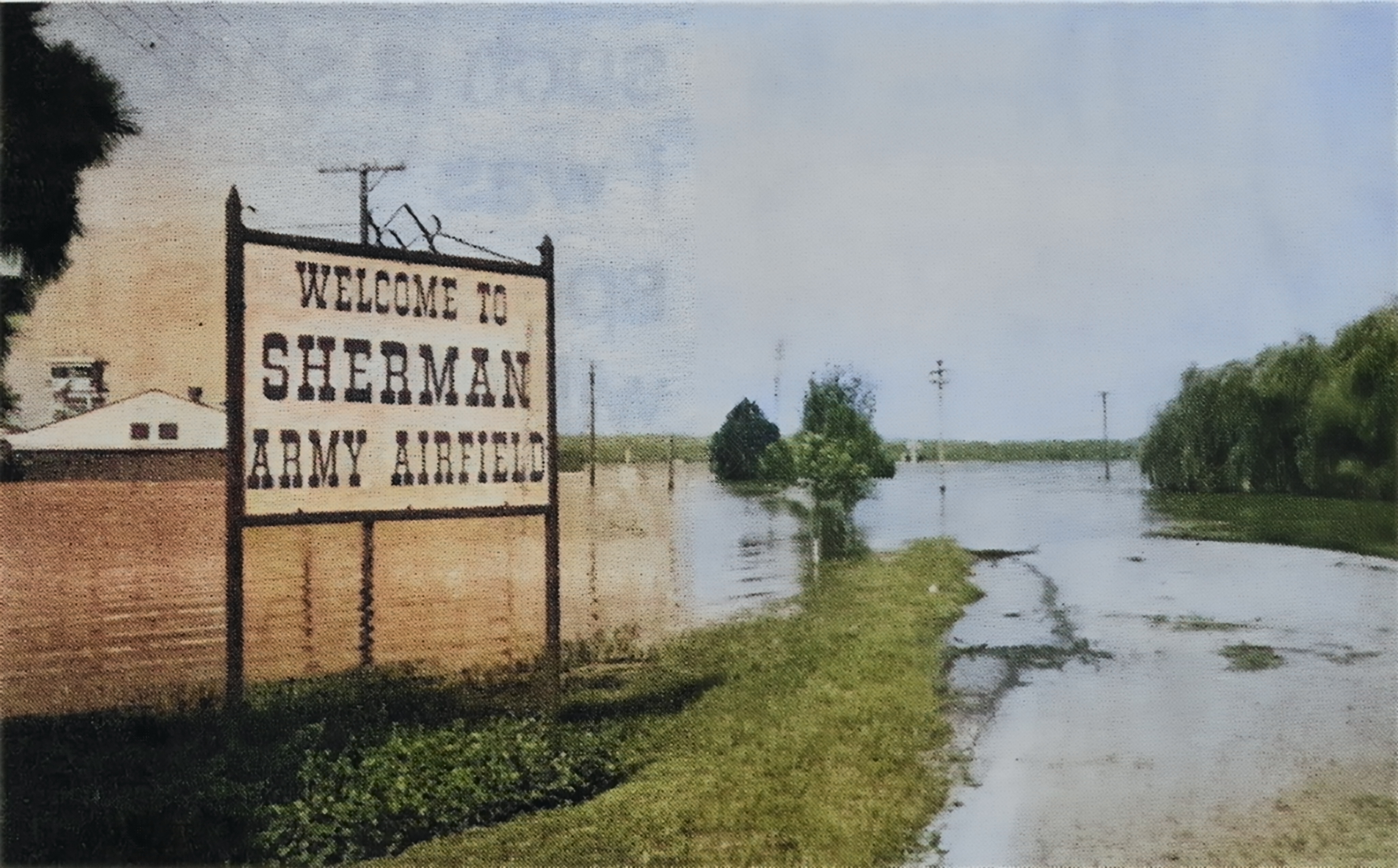
One of the most affected military installations was Fort Leavenworth, on a bluff overlooking the Missouri River from the Kansas side. At Leavenworth’s Sherman Army Airfield (shown above in a colorized version of a 1993 Exchange Post photo), two hangars and an office were submerged. Rushing currents broke windows and damaged walls. Although aircraft was moved to higher ground in time to save it, initial damage at the airfield was estimated at $100,000.
Even though their own homes were affected by the floods, Leavenworth associates—many of whom had to take detours to work as the Missouri River reached record crests—pitched in on flood relief/control efforts. Maintenance worker William Judd, operations clerk Alberto Barajas, RPOS operator Tim Bales and Exchange detective Scott Shigley helped with sandbagging to save the city of Leavenworth’s Riverfront Community Center. Despite the efforts, the center suffered more than $200,000 in damages.
Leavenworth associates who lived in St. Joseph, Missouri, roughly 40 miles to the north, were without running water for about a week, and then were under a weeklong boil-water notice when service resumed. More associates were affected when Fort Leavenworth began water conservation efforts. When the installation lost its water plants to the flood, the city of Leavenworth began supplying water to the post. The post’s water consumption was higher than expected, leading the post commander to turn off cooling systems that use water to operate.
Sources: Exchange Post archives, National Weather Service


Share your thoughts!