

In brief:
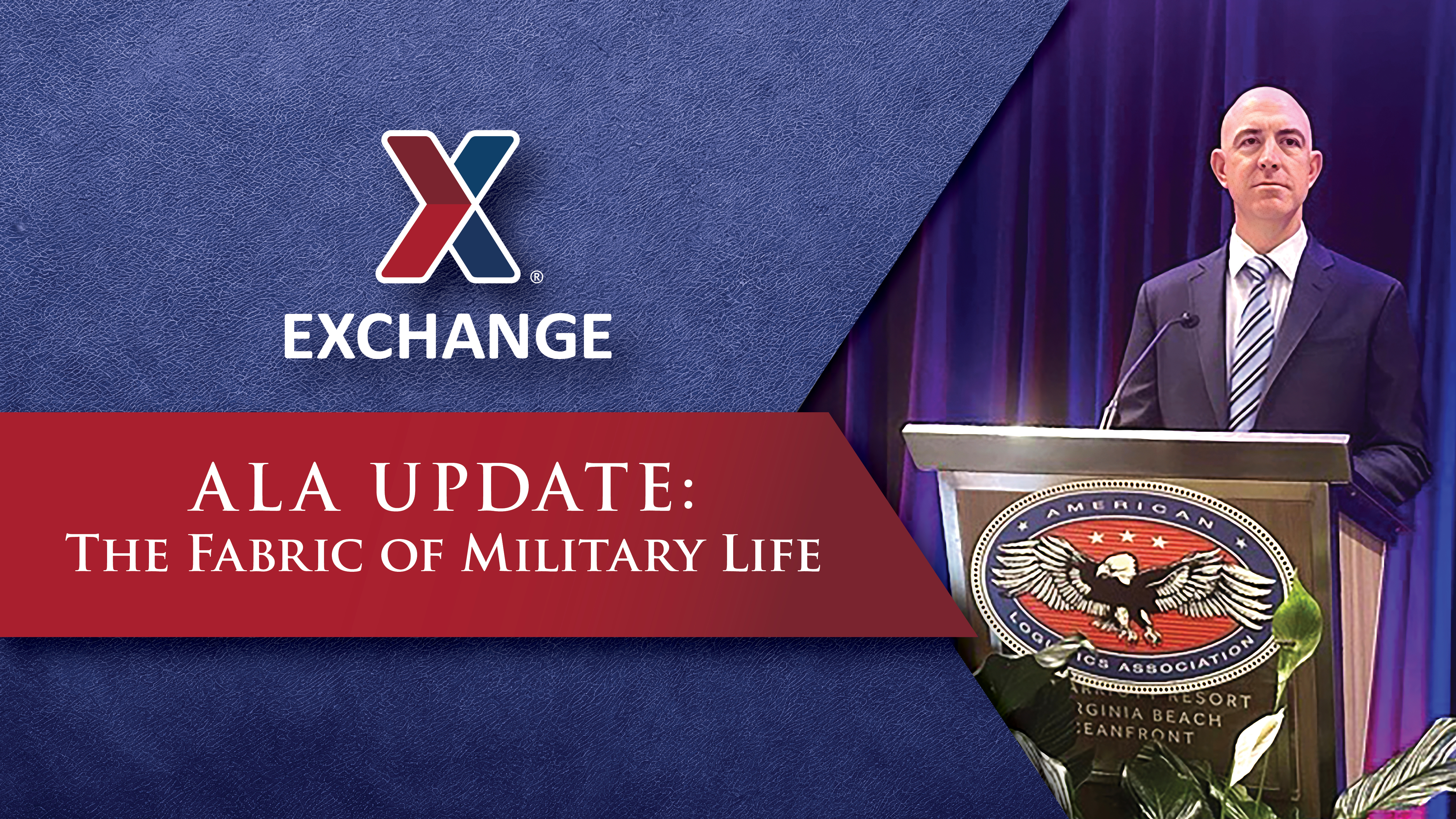
- Army & Air Force Exchange Service Director/CEO Brad Bingham outlined how the Exchange supports troops and military families at the American Logistics Association’s national convention Oct. 20.
- From mobile field Exchanges to military spouse careers, the Exchange supports service members and families throughout military life.
- The Exchange is modernizing technology and logistics while expanding military dining options, installation services and MILITARY STAR card benefits.
From stores on wheels to careers for military spouses, the Army & Air Force Exchange Service’s Director/CEO Brad Bingham shared a detailed Exchange update with hundreds of retail, government and military leaders who attended the American Logistics Association’s national convention Oct. 20 in Virginia Beach, Virginia.
ALA is a nonprofit trade association that promotes, protects and enhances quality-of-life benefits for service members, military retirees and military families.
Following presentations by Assistant Secretary of War for Sustainment Honorable Brian D. Birdwell, Navy Exchange Service Command CEO Rear Admiral (Ret) Robert Bianchi and Marine Corps Exchange CEO Ed Cutshall, Bingham outlined how the Exchange is leveraging emerging technologies and vendor partnerships to accelerate efficiencies and further bolster support of the military mission.
“From basic training to retirement, the Exchange truly is woven into the fabric of military life,” Bingham said, debuting a video depicting the Department of War retailer’s lifelong connection to service members.
Strength in every thread
The Exchange reported record earnings of $513 million and a $307 million dividend to the Army, Air Force, Space Force, Navy and Marine Corps in 2025. Those results support a dual mission: going where troops go and generating financial support for military Quality-of-Life programs.
“Every dollar we earn is either paid out as a dividend or reinvested in the business to improve facilities, grow services and improve customer service every single day,” he said.
Bingham credited industry partners with helping the Exchange deliver that support, whether keeping main stores stocked or supplying troops in remote locations.
“A huge part of the success we’ve had … is because of the partnerships we’ve built,” Bingham said. “Partners support us every single day. We can’t do it without them.”
Stitched into each mission
When military commands need retail support away from an installation, the Exchange has several ways to respond.
Nearly 25 mobile field Exchanges—stores on wheels—are positioned around the world for deployment. The Exchange can also operate from temporary facilities or equip military units with merchandise and sales systems.
“You don’t see big-box retailers or specialty stores there, but you will see an Exchange,” Bingham said.
Flexible store formats allow the Exchange to meet command needs during training exercises and operations in austere locations as well as disaster response.
“Going where the military goes is what makes us different,” Bingham said. “And when an MFE rolls in, the looks on troops’ faces are priceless.”
Keeping those operations supplied starts with stocked distribution centers and reliable transportation. Bingham said investments in technology and logistics are improving service levels while reducing costs.
Built from whole cloth
The Exchange is updating point-of-sale, logistics, human resources, finance and store operations systems. Plans also include food kiosks and replacement of legacy inventory management, forecasting and assortment planning systems.
“We’re modernizing more than systems,” Bingham said. “We’re modernizing data too. We have a project underway right now to replace our legacy databases with systems that are AI-native or AI-capable.”
AI also gives the Exchange more options to build software in-house rather than purchase it from outside providers.
The ties that connect
At the Exchange’s Dan Daniel Distribution Center, the goods-to-person automation system brings merchandise directly to associates filling orders, reducing time spent retrieving products in the massive 1.4 million-square-foot-facility.
“Goods-to-person is revolutionizing operations at our largest distribution center,” said Bingham, adding that the capability is likely to expand to the Exchange’s Waco and West Coast distribution centers. “Our Logistics leaders did an amazing job finding the right capability, deploying it and optimizing it in a very short time.”
In Europe and the Pacific, the Exchange’s supply chain includes bakeries and water plants. More than 4.7 million baked items were produced in 2025 with the majority of products supporting Department of War Education Activity school meals, the Defense Commissary Agency, sister military exchanges, dining facilities, Morale, Welfare and Recreation activities and other agencies.
Made to order
With 1,500 restaurants worldwide, food is a big part of the Exchange benefit—bringing in $1 billion in sales last year.
“We have some of the most recognizable brands, which we either operate directly or run through concession agreements where the concessionaire operates the business,” he said. “People also want convenience: access to nutrition anywhere on the installation. We’re up to 800 24/7 self-service markets worldwide, and we expand where there’s a need.”
At Fort Stewart, eligible Soldiers can use meal entitlements at participating Exchange restaurants through the Army’s Flexible Eating and Expanded Dining program.
Soldiers present their Common Access Card, and the system verifies their eligibility and whether they have a meal available. They select from designated meals paid for by the Army.
First-week demand required bringing in additional food from other installations to keep restaurants supplied.
“Traffic has held steady since the program launched in August,” Bingham said. “Soldiers are extremely happy with it.”
The Exchange is embedded in the Army’s plans to expand the program and is exploring a similar approach with the Air Force.
Woven into daily routine
Exchange malls provide another reason for military families to stay on the installation for everyday needs, Bingham said, and many of the businesses are owned by Veterans and military spouses.
More than 4,000 businesses offer services ranging from haircuts and nutrition products to optometry, dental care and durable medical equipment.
The Exchange is expanding wellness and telecommunications services, including working with partners to build cell towers and enhance on-installation cellular service. And, the Exchange’s first mental health clinic is opening soon at U.S. Army Garrison Humphreys in Korea, with others to follow in the region.
Flexibility built in
Changes are ahead for MILITARY STAR card, which Bingham called “military resale’s card,” noting that “the entire military community benefits from it.”
The card’s interest-free military clothing credit limit is increasing from $1,000 to $1,500. The higher limit will give service members more flexibility to purchase the military clothing they need.
In 2027, the MILITARY STAR card will be able to be used outside the gate anywhere Discover is accepted in the U.S. MILITARY STAR is a financial readiness tool, especially for junior service members learning how to manage credit. It has no annual, late or over-limit fees and the lowest APR among retail cards. Fuel, restaurant and promotional discounts as well as earning rewards on purchases are additional benefits.
Cut from the same cloth
With 45% of its workforce made up of Veterans, military spouses and family members, the Exchange has a competitive advantage, Bingham said.
“They know our customers better than anyone,” he said. “They know the challenges of a PCS move or a deployment. Having heroes on our team is a strategic advantage.”
The Exchange recruits through programs and partnerships that include SpouseWorks, the Military Spouse Employment Partnership and SkillBridge.
Tight-knit community
At checkout, customers can also help military families in need by donating to service relief organizations.
Since the program began nearly 10 years ago, Exchange shoppers have contributed $16 million at on-installation stores and ShopMyExchange.com. The donations support Army Emergency Relief, the Air Force Assistance Fund and the Navy-Marine Corps Relief Society.
Value is always in style
With the holiday shopping season approaching, Bingham asked industry partners to push the newest brands and must-have products to Exchange stores.
Tax-free shopping alone is no longer enough to secure long-term loyalty, he said. Customers must see value in the Exchange’s prices, promotions and selection.
Veterans Day, Black Friday and Cyber Week promotions are among the fourth-quarter offerings planned for stores and online.
“Tax-free isn’t enough,” Bingham said. “The promotions that industry partners support drive value. It’s what our customers expect—and deserve.”


Share your thoughts!