

In brief:
- Hurricane Mitch caused widespread destruction in Central America in 1998.
- The Exchange supported a U.S. humanitarian relief mission in four countries.
- Lessons learned from Panama Exchange support for previous missions.
In late October 1998, Hurricane Mitch struck Central America, then diminished to a tropical storm on the U.S. Gulf Coast in early November. Destruction was widespread in Central America, where thousands of Air and Army National Guard troops and Army reservists were sent to four countries on a humanitarian cleanup and rescue mission.
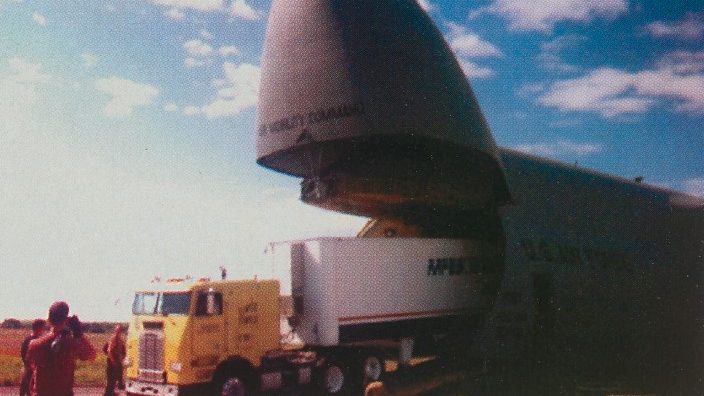
The Exchange was there, too, in all four countries. By early December, a tactical field Exchange (TFE) was set up in El Salvador (pictured above is the trailer being unloaded from a plane). Similar operations in Nicaragua, Honduras and Guatemala quickly followed. The TFEs were in the field for eight months.
“This is a combined effort to rebuild and provide aid where it’s most needed,” Air Force Maj. Jill Shaw, an AAFES contingency plans officer, said in the Exchange Post. “Our mission is to provide the U.S. service members deployed to the area with what they want, where they want it, within reason.”
Here’s some of what they wanted: batteries, hangers, laundry bags, flashlights, sewing kits, sunflower seeds, coffee, soft drinks, chips, razor blades, underwear and socks. “Not necessarily in that order,” Shaw said.
At the time, the Exchange operated in Panama, although support there was drawing to a close. The Panama location already had extensive experience with annual humanitarian exercises in Central America. Shaw said that lessons learned from previous disaster relief efforts made the Exchange’s support for the Mitch relief efforts easier.
“AAFES’ effort received a jump start from its personnel and resources in Panama, despite its operations diminishing there as U.S. troop withdrawal nears completion for [Panama Canal Treaty] compliance,” Shaw said.
Panama associates spent their Christmas setting up operations in Honduras. “It’s been a team effort,” said Panama Human Resources Manager Mark Speidell. “The troops we are supporting here are doing great work. I’m very proud to be a part of it.”
Speidell was one of a half-dozen associates who were awarded Certificates of Achievement from both the South East Region and the Joint Task Force Aguila El Salvador. The associates also received commander’s coins, presented by the Panama Theater brigadier commander.
The Exchange left Panama in 1999, ending an 88-year presence in the country. The Exchange still operates a Central American store at Soto Cano Air Base in Honduras.
Sources: Exchange Post archives, History.com


Share your thoughts!