
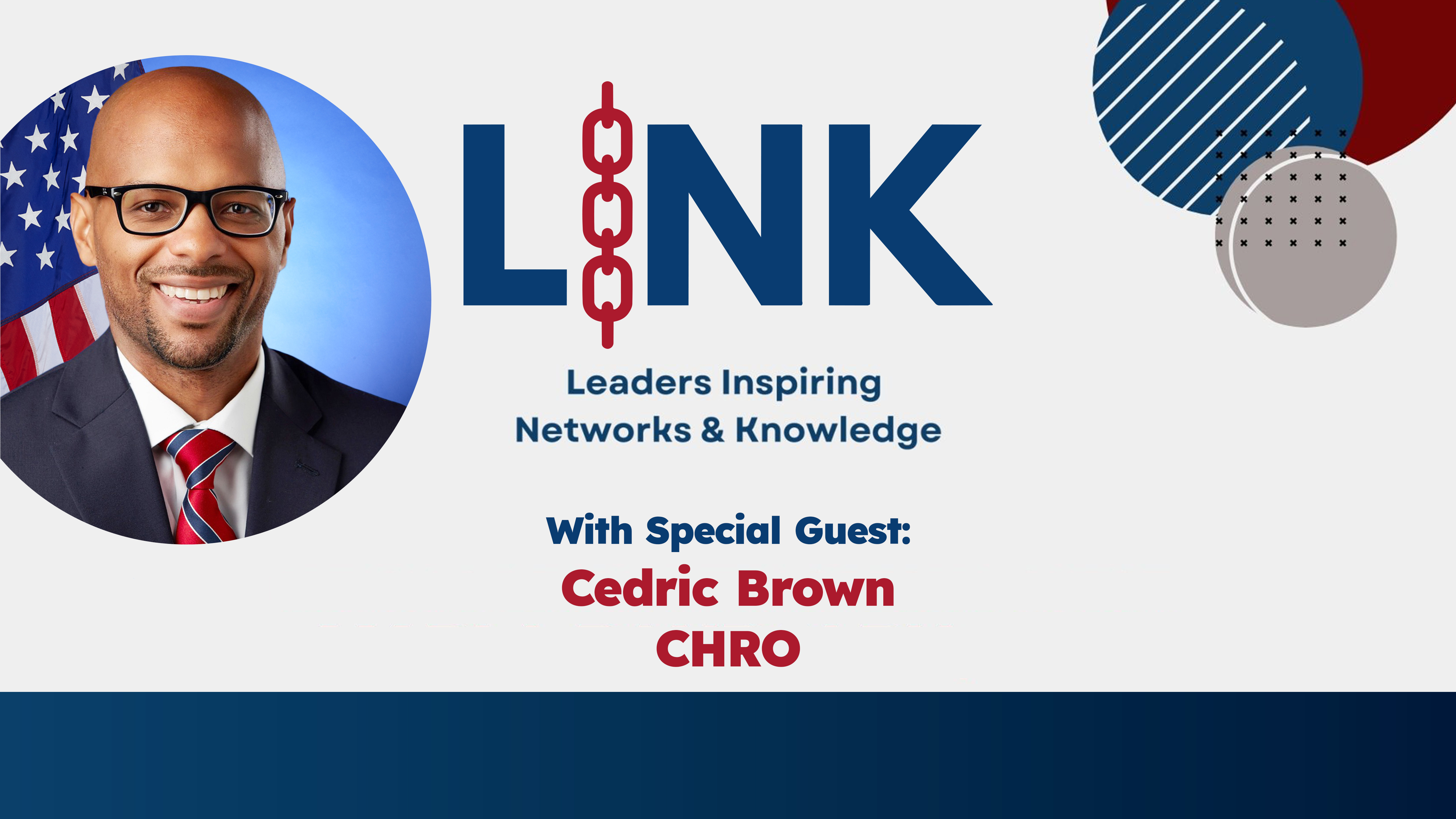

In brief:
- CHRO Cedric Brown spoke on “Elevating the Associate Experience”
- He detailed five elements that are crucial to associate development
- Brown directs his teams to be visible and accessible—and expects that from himself
For Cedric Brown, “Elevating the Associate Experience” wasn’t just the title of his Nov. 5 LINK presentation. Since Brown became Chief Human Resources Officer in June, he has adopted it as his motto.
“What we do as an organization is support military members, their families and Veterans,” Brown told his online audience. “That’s our primary focus. But at the same time, our associates play a critical and key role in what we do to support the military and the family members and Veterans. We want to ensure our associates have a positive experience.
“In return, they can provide the best support to our customers. But if our associates are not properly trained, if they’re not properly educated, if they don’t have the resources and tools they need to do their job, how can they provide the optimal customer service to our customers? The customer experience starts with equipping our associates to be successful in their jobs.”
Brown, who started with the Exchange a little more than 20 years ago in the HR Management Training Program, worked at NAS JRB Fort Worth as a manager trainee and took his first HR manager role at Fort Riley and McConnell AFB.
At the time, he had no ambitions to become CHRO. When he saw what the area HR manager did, traveling from installation to installation to visit with teammates, he thought it sounded like a cool job.
“As I grew with the Exchange and was introduced to a number of positions, from HR manager to HR generalist to HR Systems, it really shaped my perspective and made me want to do more, and that’s exactly what I did.
“My own career has shown how much development and encouragement can matter, and that is a perspective that I take into my role,” he said. “I want to ensure that those same opportunities are available for our teammates who are coming up.”
Five elements to elevating the associate experience
Meaningful work. “We want associates to take pride in what they’re doing on a daily basis,” Brown said. “Because when you take pride in what you’re doing, you want to return. You will come back, and you’ll be excited about it. You will give that extra effort.”
Supportive leadership. “We want to make sure the leadership team is supporting them, giving them the tools and resources that they need,” he said. “We need to take the time to coach and develop our teammates and not just leave our folks out there on an island to learn on their own.”
Career development. “We need to create opportunities to grow,” Brown said. “We have teammates who want to learn new skill sets, who want to do things differently. Create those opportunities within your team or outside your team for teammates to grow and learn new things.”
Recognition and appreciation. “When associates do well, when they knock out that assignment or their project that you had them working on, show appreciation,” he said. “Sometimes it starts with just recognizing that they’ve done a great job. Showing a little recognition, saying ‘Thanks, I really appreciate what you’ve done,’
goes a long way.”
Connection and belonging. When associates have questions about their role or their future, leaders should be ready to listen, Brown said.
“Sit down and have those conversations about ‘Where do you see yourself in the next three to five years? Let’s talk about how I can help you get there.’ It’s important to have that dialogue because in the absence of the dialogue, people just draw their own conclusions. And that’s where you see disengagement in the work that the associates are doing.
“We often talk about having an open-door policy, but are you truly available to your teammates when they want to have those conversations? As leaders, it’s difficult at times because you have a lot on your plate, but we have to be diligent about making time for our teammates to grow the next generation.”
Being visible and accessible
In addition, Brown said he keeps seven “C’s” on a sticky note on his computer monitor: communication, collaboration, confidentiality, connection, commitment, credibility and change readiness. As CHRO, he emphasizes his teams should be visible, accessible and effective.
“When I say visible, I mean not only out in the Exchanges and other facilities, but at headquarters,” he said. “Have conversations, walk the floors, be visible so that people know who their HR contact is if they have questions or need assistance. Not every situation will have an immediate answer. I have no problem saying, ‘I’m not sure what the answer is, but let me do a little research and I’ll get back to you.’ That helps to establish credibility.”
Brown doesn’t just expect visibility and accessibility from his team—he expects them from himself, and he practices them from HQ associates’ first day on the job.
“Whenever we have a new hire orientation at headquarters, I take 10, 15 minutes to go down to meet the new hires, introduce myself and my vision for HR,” he said. “I want them to be able to put a face to a name. I don’t want them to see this as just another in-processing or just another new hire orientation. That’s very important to me. I think it helps with making that connection with those joining the organization.”
Brown said that HR always takes employee feedback into consideration, including the results of the annual Associate Engagement and Job Satisfaction survey, which HR teams use to improve resources for associates. He encouraged associates to take advantage of Percipio to add to their education.
“If you’re using Percipio just for mandatory training, you’re missing out,” he said. “There are tons and tons of training opportunities available in Percipio. Search and look at the different categories we have, and take advantage of the training that’s available to you at no cost.”
Brown said that while HR has strong programs in place to support associates, elevating the associate experience is never finished.
“We often look at projects and initiatives and say, ‘I met the completion date and that’s the end of it,’” he said. “But the associate experience is about continuous improvement. It is an ongoing process. We will never get to the point where we say, ‘Well, we’ve met the mark and that’s the end of elevating the associate experience.’ It’s a process that we will continue to work through as we look to equip managers and continue to create opportunities for our associates.”
LINK (Leaders Inspiring Networks & Knowledge) aims to strengthen workplace culture, boost morale and reinforce the value of connection. Each month, a senior leader hosts a session via Teams aligned to key business priorities.
Active associates who missed Brown’s presentation can view it here.



Share your thoughts!