

Twenty years ago, Steve Groll was familiar with his Exchange benefit while serving in the Air Force. During the weeks after the 9/11 attacks, he relied on the Exchange as a lifeline.
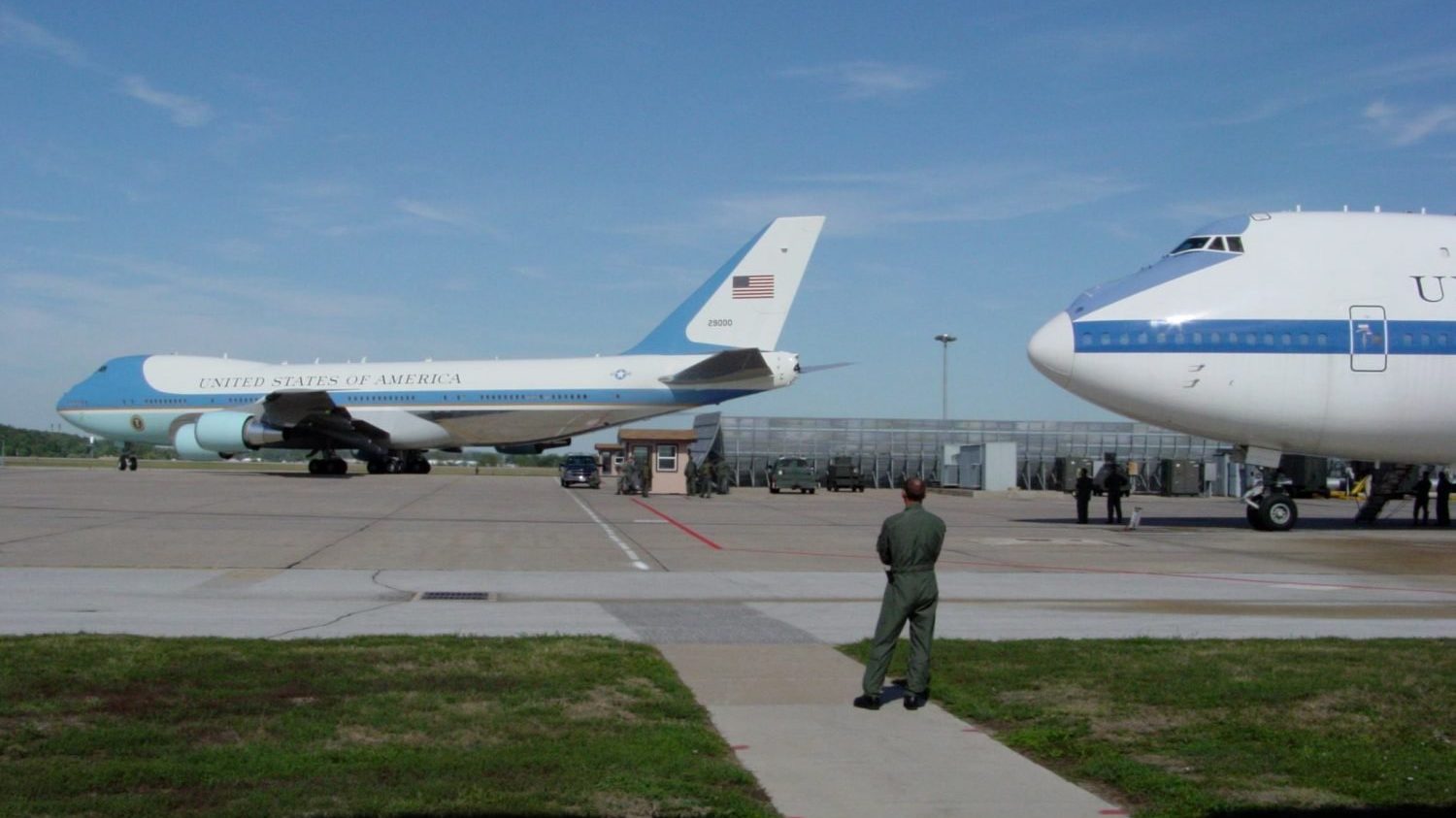
On the morning of 9/11, Groll, then an Air Force major, was the navigator on an E-4B aircraft that landed at Andrews Air Force Base to pick up Brent Scowcroft, President Bush’s national security advisor, to take Scowcroft to Offutt Air Force Base in Nebraska so he could lead the debrief of a major nuclear command and control exercise called Global Guardian.
Picking up Scowcroft and his team went as scheduled. Getting them to Offutt was more of a challenge.
“We taxied uneventfully to the end of the runway at Andrews, not knowing that anything was going on,” said Groll, now vice president, Inspector General for the Exchange. “But we sat at the end of the runway for a very long time, which is extremely unusual. Typically at Andrews, they wanted to get us out of their airspace as quickly as possible.”
Groll listened to some additional radio frequencies and heard that an aircraft had hit one of the World Trade Center towers. Even then, he thought that maybe this was part of the Global Guardian exercise. The crew was quickly informed that the attack was real.
“We reached back out to Andrews and asked for immediate departure, which they cleared us for right away,” Groll said. “We got out and started hearing air-traffic control telling every aircraft in the sky that they were going to be directed to land at the nearest airport. Then they gave our aircraft a change in heading, which Groll told the pilots “was going to take the aircraft right over restricted airspace at the White House.” Air Traffic Control confirmed the heading and told the crew to expect additional vectors before getting cleared for its flight plan route.
As the plane turned around, the crew started to see smoke coming out of the Pentagon. At first, they were directed to fly to New York City to assist in a FEMA response. But then the four-star commander of Strategic Command told them to get to Offutt as soon as they could.
“We made our way back to Offutt, and as we landed, Air Force One landed and parked directly next to us,” Groll said. “At this point, we still hadn’t realized the magnitude of what was going on. The people in the back of the aircraft knew more because our platform could pull up TV stations, so they were seeing this unfold. None of us in the front of the aircraft had seen the magnitude of the disaster.”
After Air Force One landed, President Bush was quickly taken to an underground command post. Groll and his fellow crew members were told that they would take off as soon as Air Force One left.
“So we went into the ready room,” Groll said. “It was probably five hours after everything had happened, and it was the first time I had seen TV images of both towers falling. It was the first chance I had to call my wife and say, ‘We’re here, but we’re going to leave again.’” Although his family lived in off-base housing near Offutt, Groll wouldn’t see them for nearly 40 days.
“As soon as Air Force One took off, two F-16 aircraft came from absolutely out of nowhere and followed Air Force One out,” Groll said. “Then we took off to go flying a 20-hour mission, where we placed the aircraft in a survival orbit—postured so we could quickly redirect to wherever we were needed. We didn’t know what was going to happen. It ended up becoming the first Operation Noble Eagle sortie, which prioritized the defense of the homeland.”
The mission involved staying close to the president—wherever he was. And the Exchange played a recurring role.
“Every time we went into a new facility—and we had designated alert facilities throughout the country— we’d go to the Exchange and equip up on snacks to hunker down for however long our stay was going to be at those particular places,” Groll said. “Typically, we’d go by the BX to do what we called a ‘shelf check’ just to see what was going on.”
The days after the attack were unsettling for everyone, but there was an eeriness in the sky, where few aircraft were allowed to fly. “Typically you hear a lot of chatter with air-traffic control directing an aircraft to start a descent or change positions,” Groll said. “By the time we were back in Omaha, we were literally the only aircraft that they were talking to. On a day filled with unusual occurrences, this was one that stood out. It was the strangest thing.”
Every year, on Sept. 11, the former crew members do a group chat to reflect on the day to share stories and memories. For one of the crew on the E-4B, Sept. 11 was already a significant date before 9/11 changed it.
“The aircraft commander who was assigned to our aircraft, it was his birthday, of all things,” Groll said. “We didn’t know that until were flying the second sortie that evening and he said, ‘Well, this has been the strangest birthday I’ve ever had.’ We had full in-flight stewards and they could have made anything in the world. It just didn’t seem like a day for celebrating.”
Read more: 20 Years Later, Current and Former Associates Share Stories of Exchange Support on 9/11

Share your thoughts!