

On June 24, 1948, the first crisis of the Cold War occurred when the Soviet Union, amid rising tensions over control of Berlin, blockaded all access to the American, British and French sectors of the city.
At the end of World War II, the four countries had divided Germany into four occupation zones. The U.S.S.R. occupied the eastern portion of Germany and the eastern sector of Berlin, and the United States, Britain and France occupied the western zones of Germany and the rest of Berlin. The non-Soviet sectors of Berlin lay 110 miles within the Soviet zone of the country.
When the United States, Britain, and France announced plans to create a unified West German currency in June 1948, and by implication a unified West Berlin, Soviet premier Joseph Stalin blocked land routes between western Germany and Berlin, cutting cut 2 million western Berliners off from access to food and fuel.
On June 26, 78 years ago today, the United States began flying in essentials, joined soon afterward by Airmen from the United Kingdom and other countries. During the next 13 months, Airmen from the allied countries would log 200,000 flights, providing nearly 9,000 necessities daily.
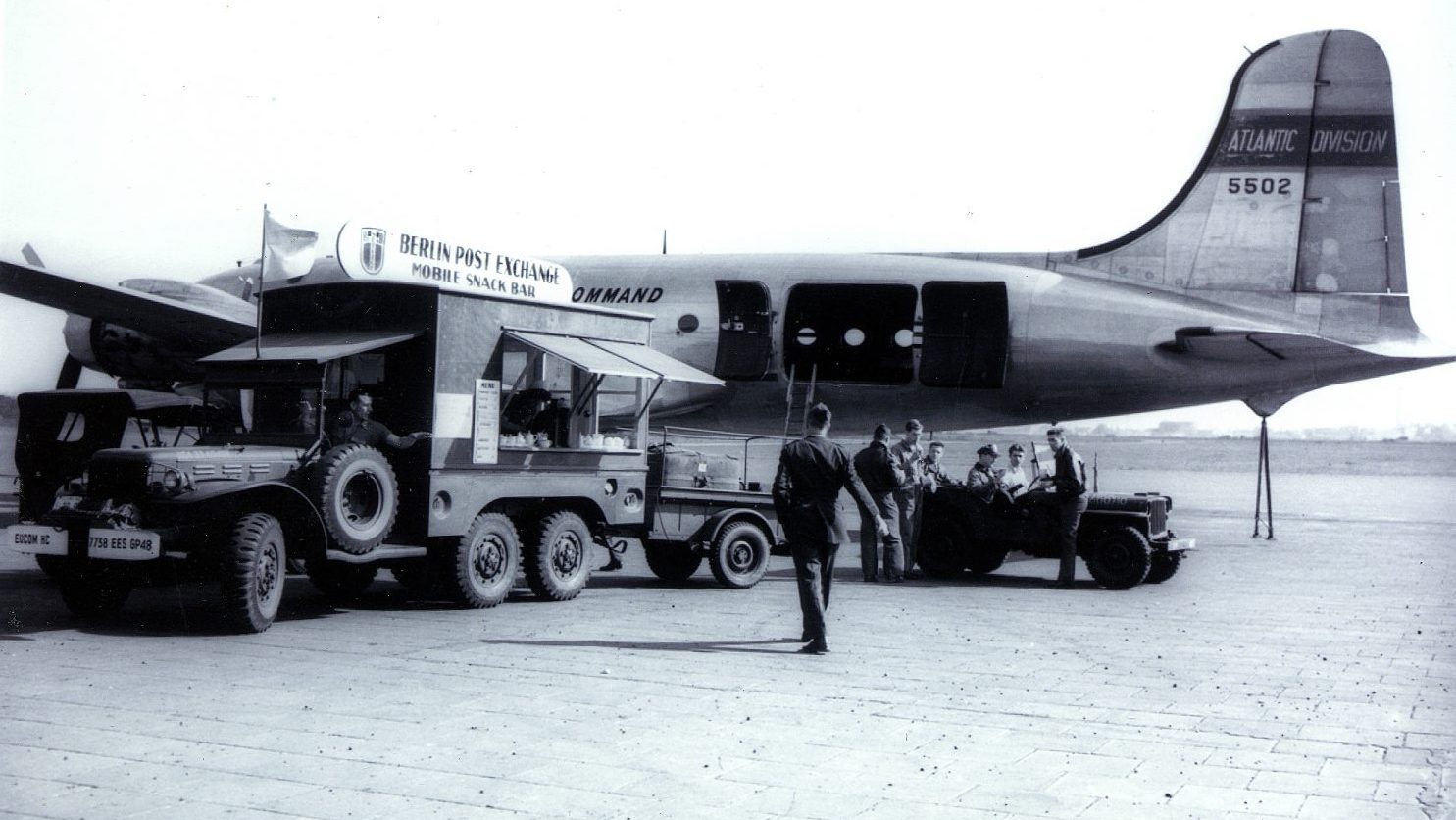
The United States called the initiative “Operation Vittles.” The British called it “Operation Plainfare.” And the Exchange provided support.
During the mission, the Post Exchange in western Berlin provided a hub for American pilots. Exchange trucks delivered food and drink to pilots on the tarmac at Tempelhof Airport in western Berlin, allowing the pilots, who worked 24/7, to quickly return to West Germany for more supplies. Speedy service was essential: A plane would land, then take off 17 minutes later.
At Rhein-Main, a store was hurriedly erected from Swiss frame buildings to provide full Exchange facilities for Airmen who flew in the airlift. The facility remained standing until August 1968, when a new Rhein-Main shopping center replaced it.
The airlift began less than a year after the birth of the U.S. Air Force on Sept. 18, 1947. In a 1972 Exchange Post story, HQ associate Harriet Milke, who had managed a gift shop in Berlin when the Air Force became a separate branch of the Armed Forces, recalled the airlift.
“All PX merchandise was flown into the city,” Milke said. “Because of the Berlin blockade, only essentials were flown in at first, and rationing was strictly enforced. However, it wasn’t long before all commodities were flown in. The airlift must have been a historical highlight of the new Air Force.”
The Soviets reopened land routes between western Germany and Berlin on May 12, 1949. But The Allies continued the Berlin Airlift through the end of September to stockpile fuel, food, and medicine in Berlin in case the blockade resumed.
Sources: Exchange Post archives, Air Force Mobility Museum.

Share your thoughts!