
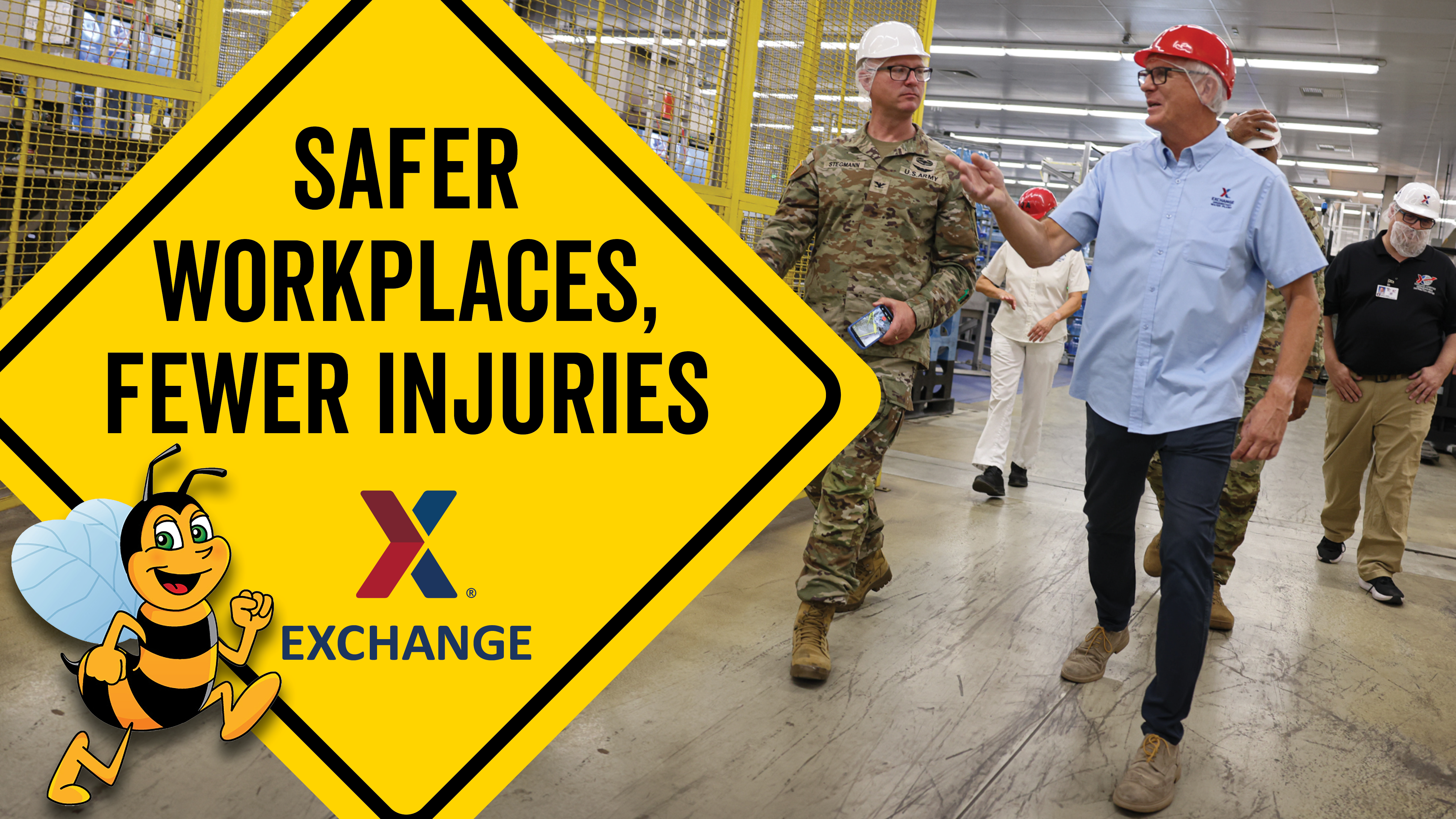

The Exchange is making steady progress in workplace safety, with improvements in its injury frequency rate (IFR), reflecting a decline in on-the-job accidents.
The IFR measures how often Occupational Safety and Health Administration-recordable injuries and illnesses occur in relation to hours worked. A lower rate means injuries are happening less often, making IFR an important benchmark for workplace safety performance.
In fiscal 2025, the Exchange decreased its IFR from 2.7 to 2.4, with more than 80 fewer reported accidents than the previous year.
The IFR industry benchmark for general merchandise stores is 3.1, according to the U.S. Bureau of Labor Statistics. As of June, the Exchange’s IFR remains at 2.4.
“The improvement points to a stronger safety culture built on greater awareness, engagement and shared accountability,” said Health and Safety Manager Danielle Tompkins. “From headquarters to stores and distribution centers, associates are becoming more mindful of hazards and more proactive about reporting concerns before they lead to injuries.”
That progress is driven by proactive risk management and associate involvement. Audits, inspections and routine data reviews help identify trends, while hazard recognition and reporting efforts give associates a direct role in improving safety in their work areas.
Refreshed training, clearer daily communication and accident record reviews keep safety top of mind. These practical steps reinforce safe work habits and help teams respond quickly when issues emerge.
Frontline leaders and associates remain central to sustaining that momentum. Leaders are expected to model safe practices and encourage consistent use of training and guidance, while associates play a critical role in watching out for one another and speaking up when something looks unsafe.
“The Exchange’s safety achievements are the result of a proactive approach that combines strong leadership, associate engagement and a commitment to continuous improvement,” said Exchange Vice President of Loss Prevention Tommie Caudle. “Across the organization, our teams work every day to identify risks, share best practices and foster an environment where safety is a core value. That commitment not only protects our people but also strengthens our ability to support the military community.”
For the workforce, the results are about more than a metric. Fewer injuries mean more associates can do their jobs safely and return home at the end of the day without harm, reinforcing the Exchange’s commitment to protecting the well-being of its team.
That culture of accountability and care is evident across the Fort Benning Exchange, which recently won the Exchange Worldwide Safety Award.
“This award is a testament to the culture our associates have built at Fort Benning,” said Fort Benning Exchange General Manager Stephanie Wilson. “By making safety a shared responsibility, our team ensures we can continue delivering the best possible service to the military community while protecting the well-being of our associates. I’m incredibly proud of their dedication and leadership.”
The Exchange plans to build on the progress through continued associate engagement, ongoing development of proactive safety-focused associates and support for the training and equipment needed to maintain safer workplaces across the enterprise.

Share your thoughts!